UPCOMING
4 to 6 November 2026

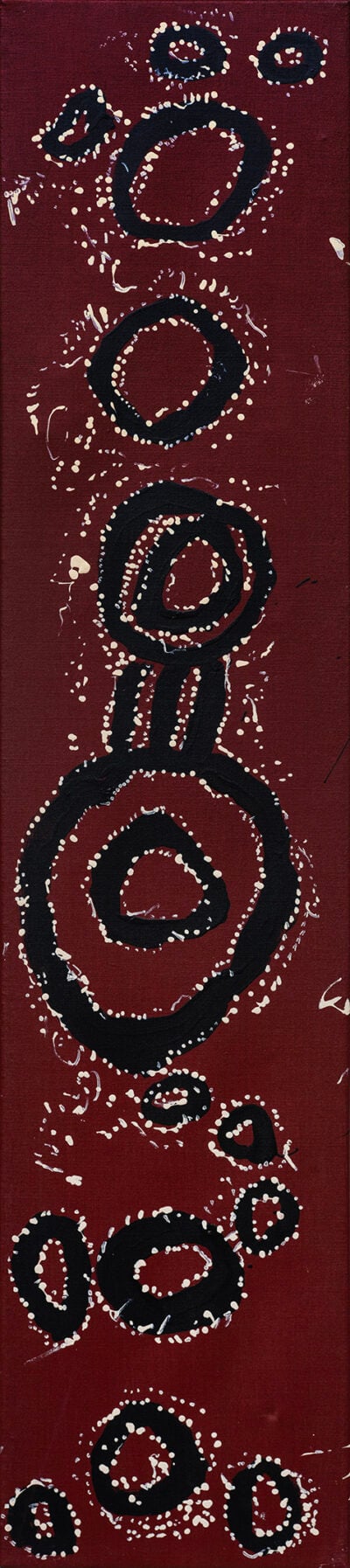
Acrylic on Linen
153 x 46 cm
A$15,000 Buy Now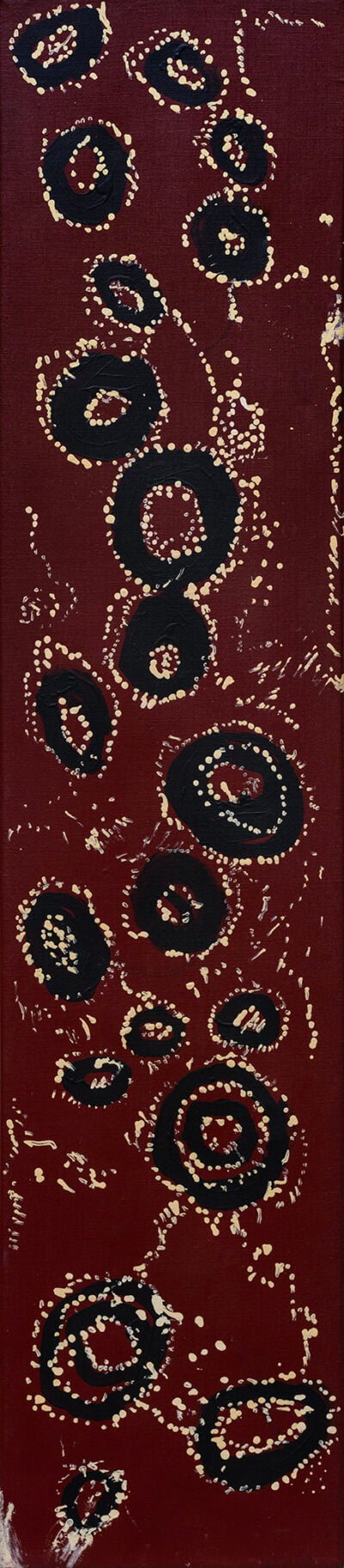
Acrylic on Linen
153 x 46 cm
A$15,000 Buy Now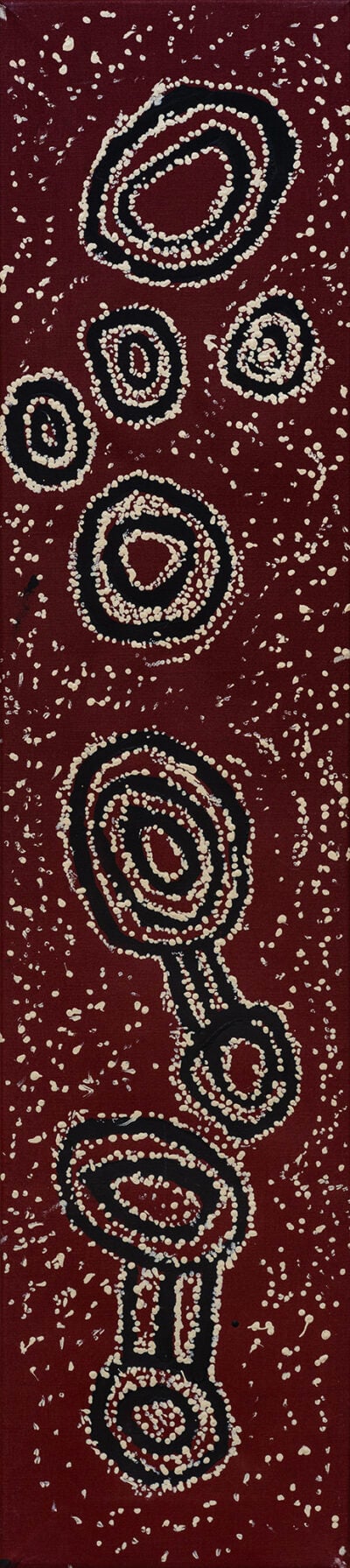

Acrylic on Linen
153 x 46 cm
A$15,000 Buy Now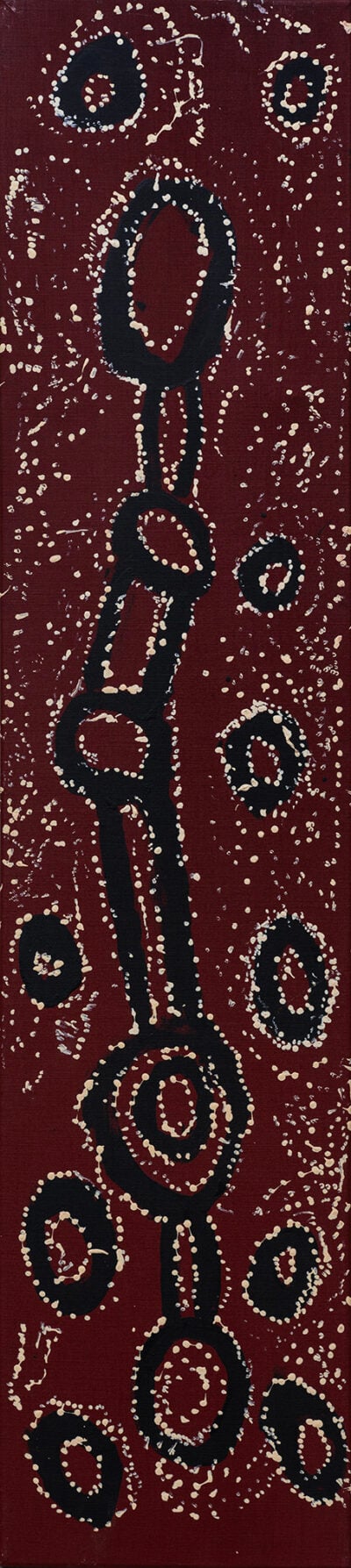
Acrylic on Linen
153 x 46 cm
A$15,000 Buy NowHaven't found what you're looking for?
Contact a consultant about other ways to acquire an artist's artwork.
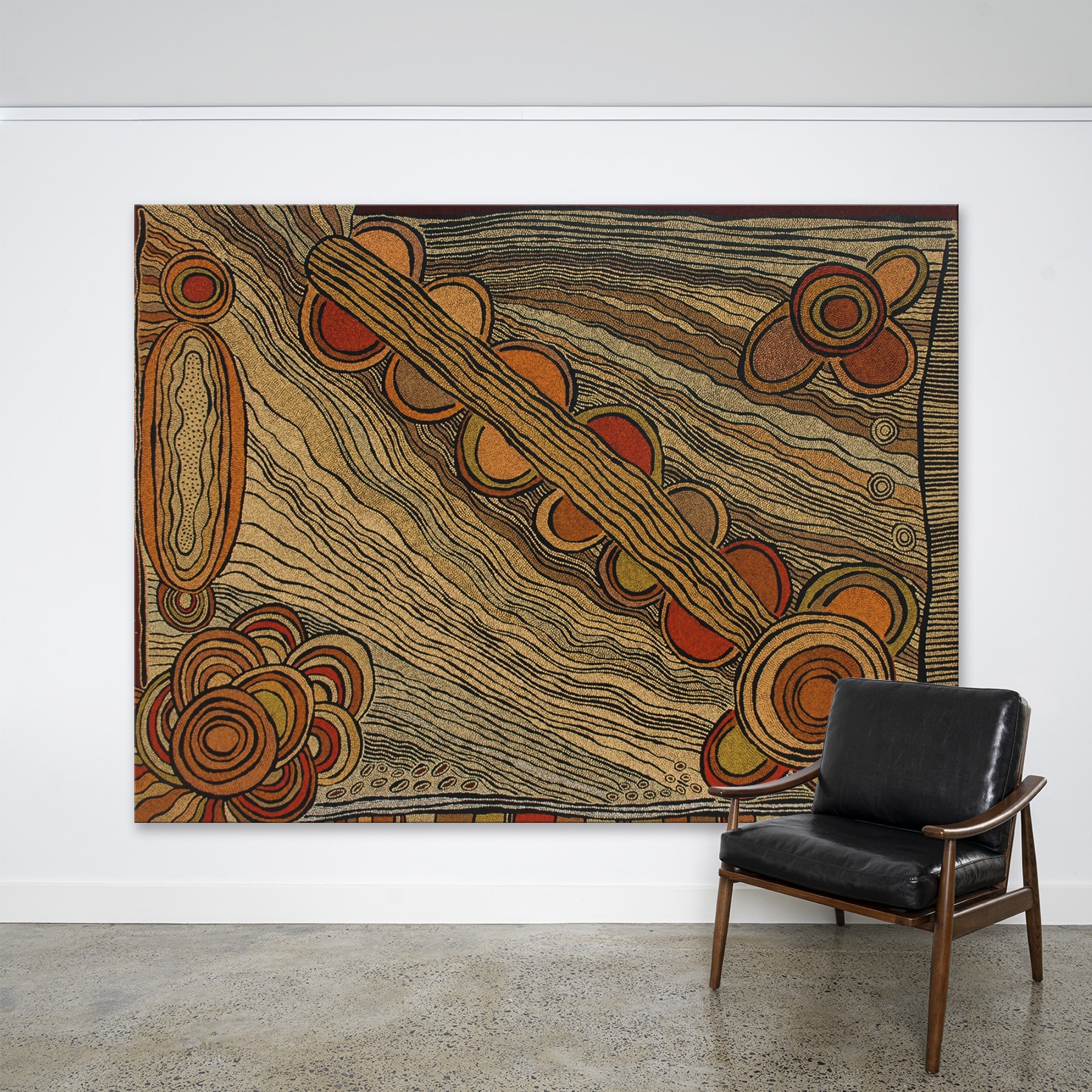
Acrylic on Linen
183 x 243 cm
A$44,000 Buy Now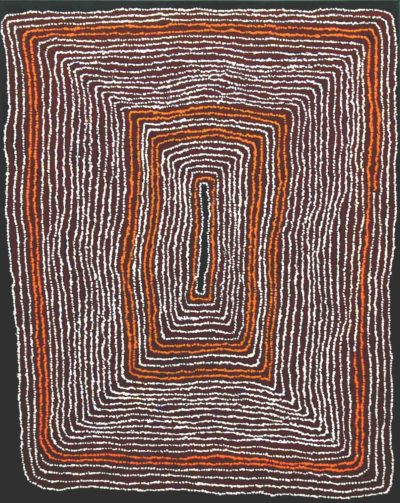
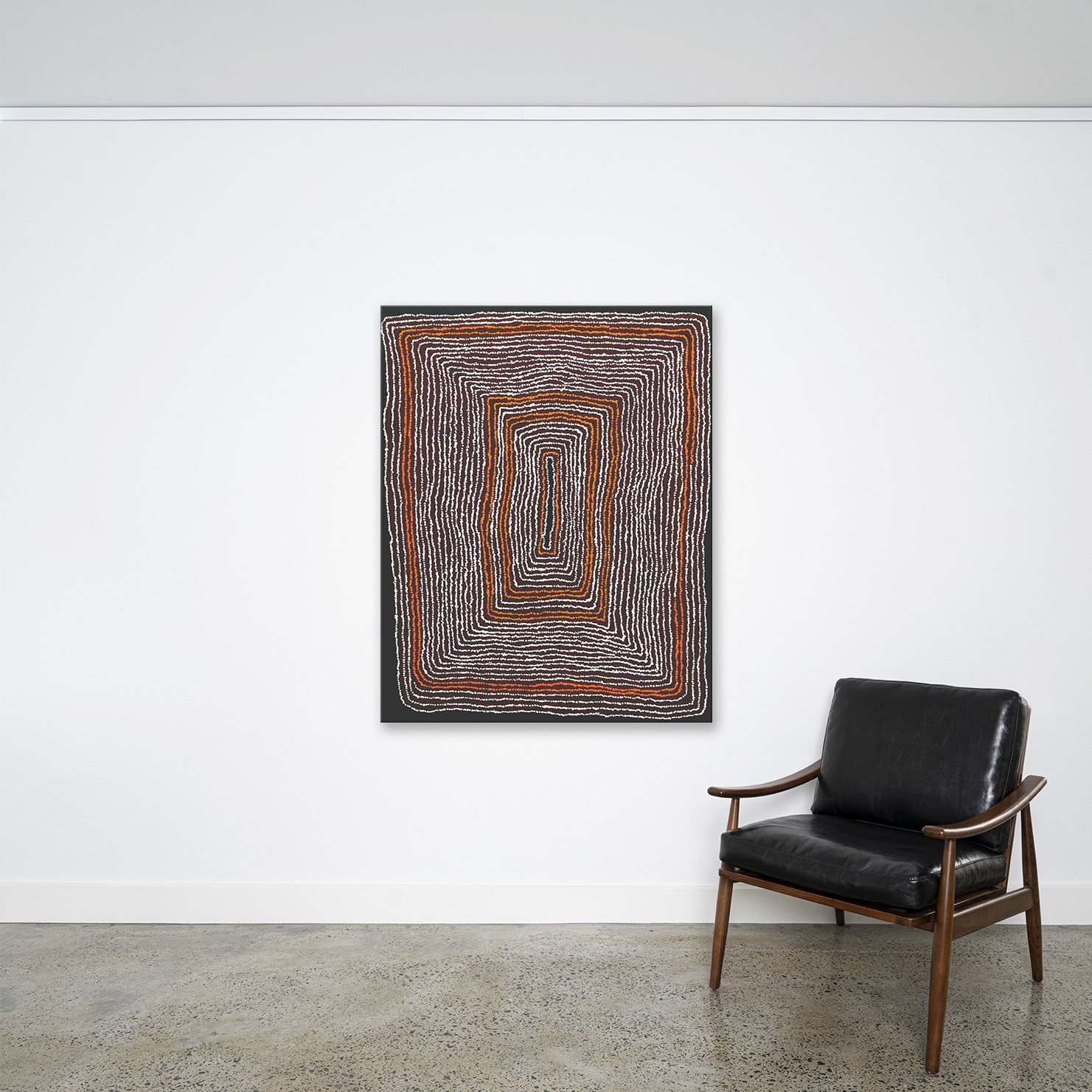
Acrylic on Linen
122 x 91 cm
A$12,000 Buy Now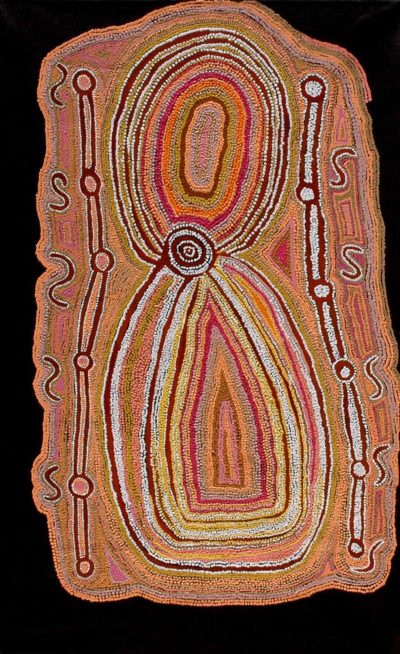
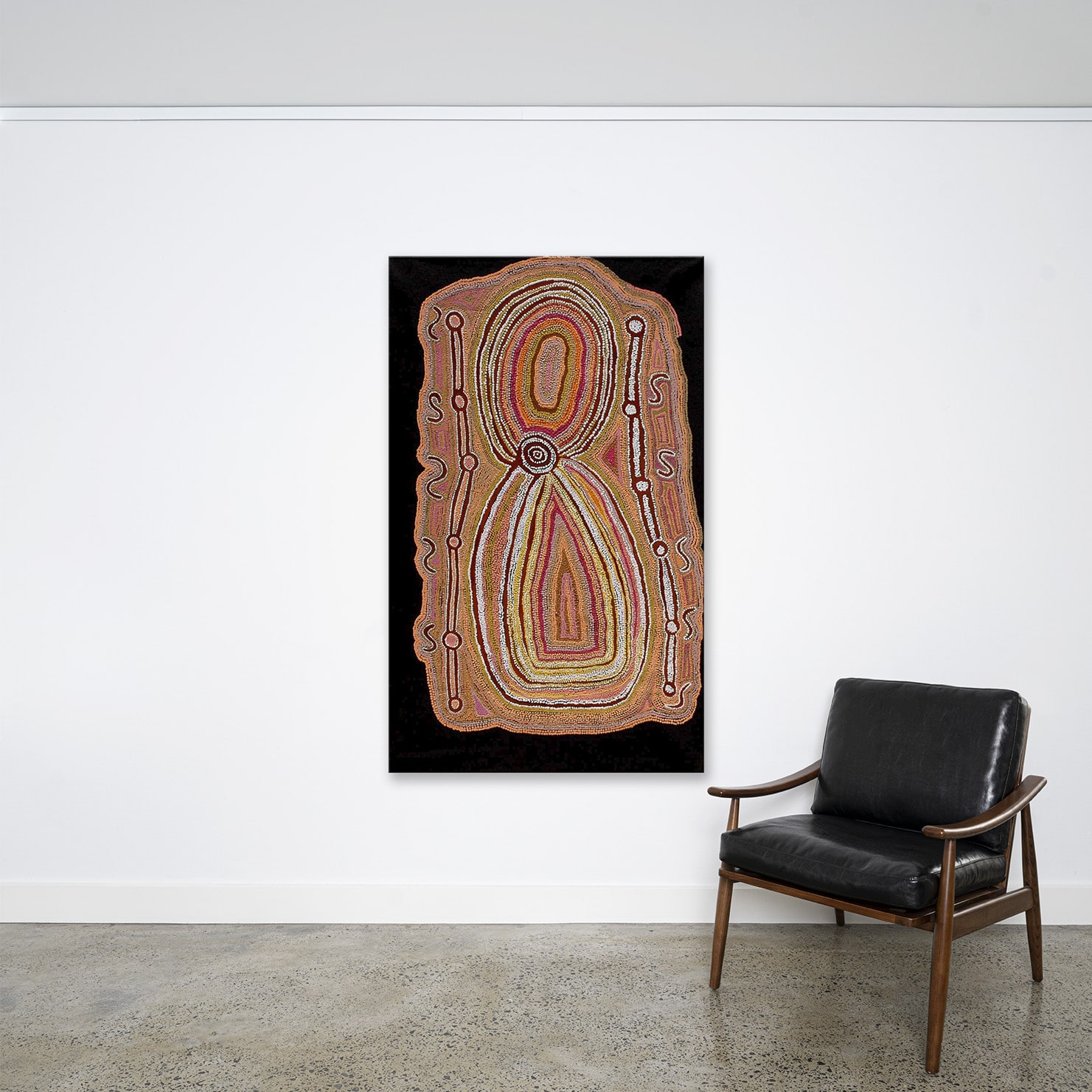
Acrylic on Linen
152 x 91 cm
A$18,000 Buy Now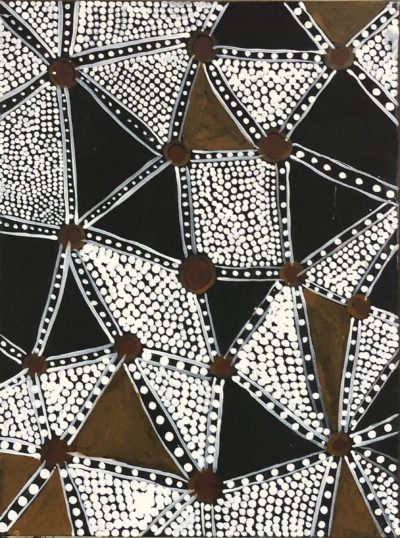
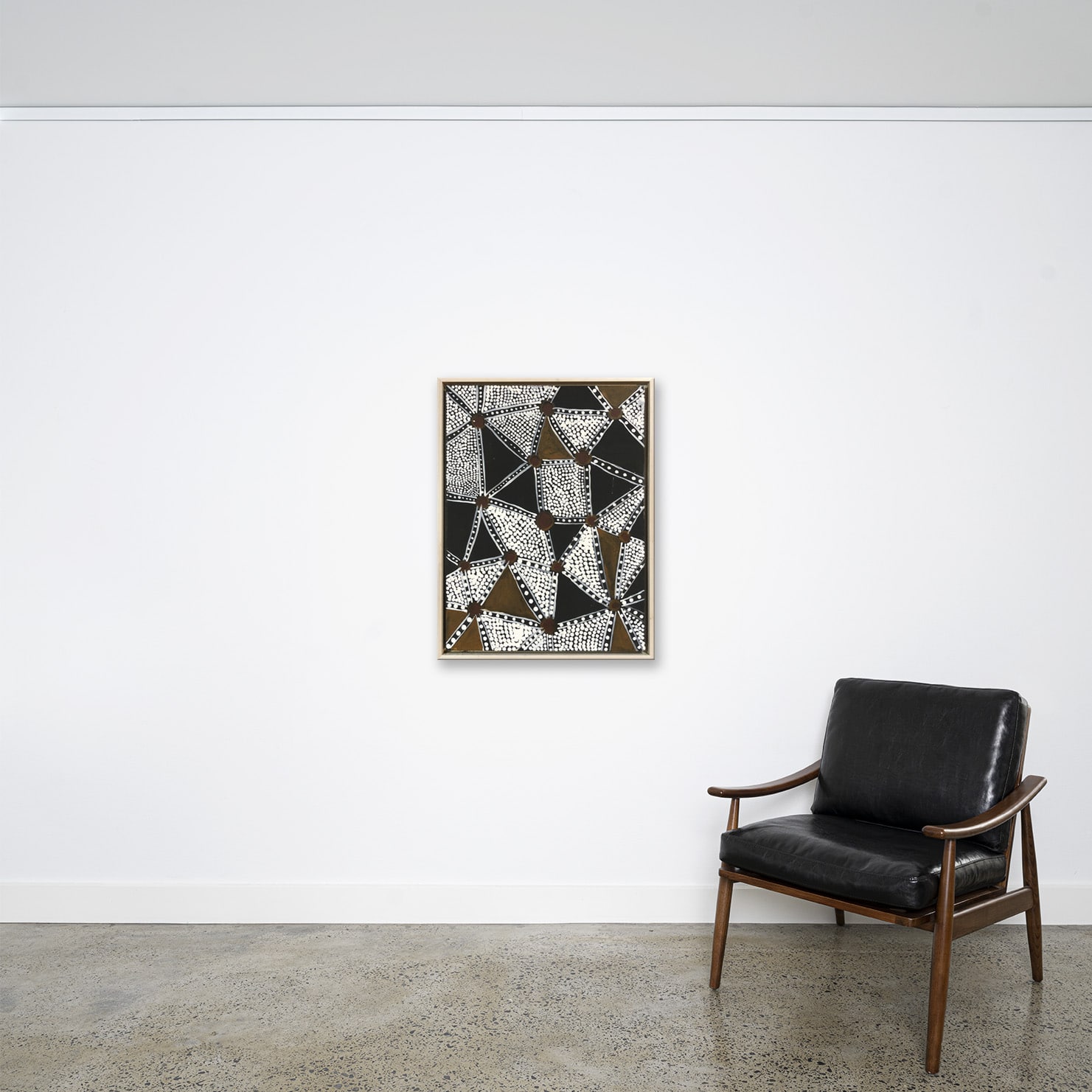
Acrylic on Canvas
83 x 63 cm Framed
A$7,500 Buy NowAboriginal and Torres Strait Islander Cultural Warning: This page contains the name and image of a deceased First Nations artist. The artist’s photograph has been placed at the end of this biography in recognition that viewing images of deceased people may be culturally sensitive for some Aboriginal and Torres Strait Islander peoples. Please take care if you choose to continue scrolling.
Born circa 1920
Died 2006
Region Western Desert
Language Pintupi
Pegleg Tjampitjinpa was born around 1920 near Wilkinkarra (Lake Mackay) in the Western Desert of Western Australia, on the country of his Pintupi ancestors. He lived a fully traditional life in the Gibson Desert, remaining beyond the reach of European contact until 1957, when a Northern Territory Welfare Branch patrol encountered his family at a rockhole south of Kiwirrkurra. His family, which included more than a dozen children across multiple wives, was among the last groups to make contact with the outside world in this remote region.
His distinctive name derives from a defining event in his early life: an infected spear wound sustained during a tribal conflict led, after four months of suffering, to the amputation of his leg from the knee down. Thereafter he moved with the aid of a long pole, a characteristic that those who knew him remembered vividly. He is documented by name in two significant historical accounts of the Western Desert – W.J. Peasley’s Bindibu Country (1975) and Douglas Lockwood’s The Lizard Eaters (1964). In 1962, he was photographed alongside fellow Pintupi man Paddy Japanangka Lewis as warriors leaving the desert, in an image published in National Geographic by anthropologist Donald Thomson – one of the defining photographs of the last contact era.
Following contact, his family moved to Yuendumu in 1964, and he eventually settled at Mount Liebig (Watiyawanu) in the Northern Territory. In 1984 he was appointed trustee of the Wilkinkarra Land Trust, an honour that acknowledged his status as a senior custodian of Wilkinkarra country – the vast salt lake sacred to Pintupi law. He was a man of considerable authority and quiet strength, deeply respected as a keeper of ceremony and Dreaming knowledge.
Pegleg began painting during a visit to his close lifelong friend and fellow Pintupi man Pinta Pinta Tjapanangka at Walungurru (Kintore). Following Pinta Pinta’s death, and as his own eyesight deteriorated, he ceased painting for a period. A successful eye operation in the late 1990s restored his vision and he returned to the canvas with renewed purpose, continuing to paint until his passing in 2006.
ARTISTIC PRACTICE
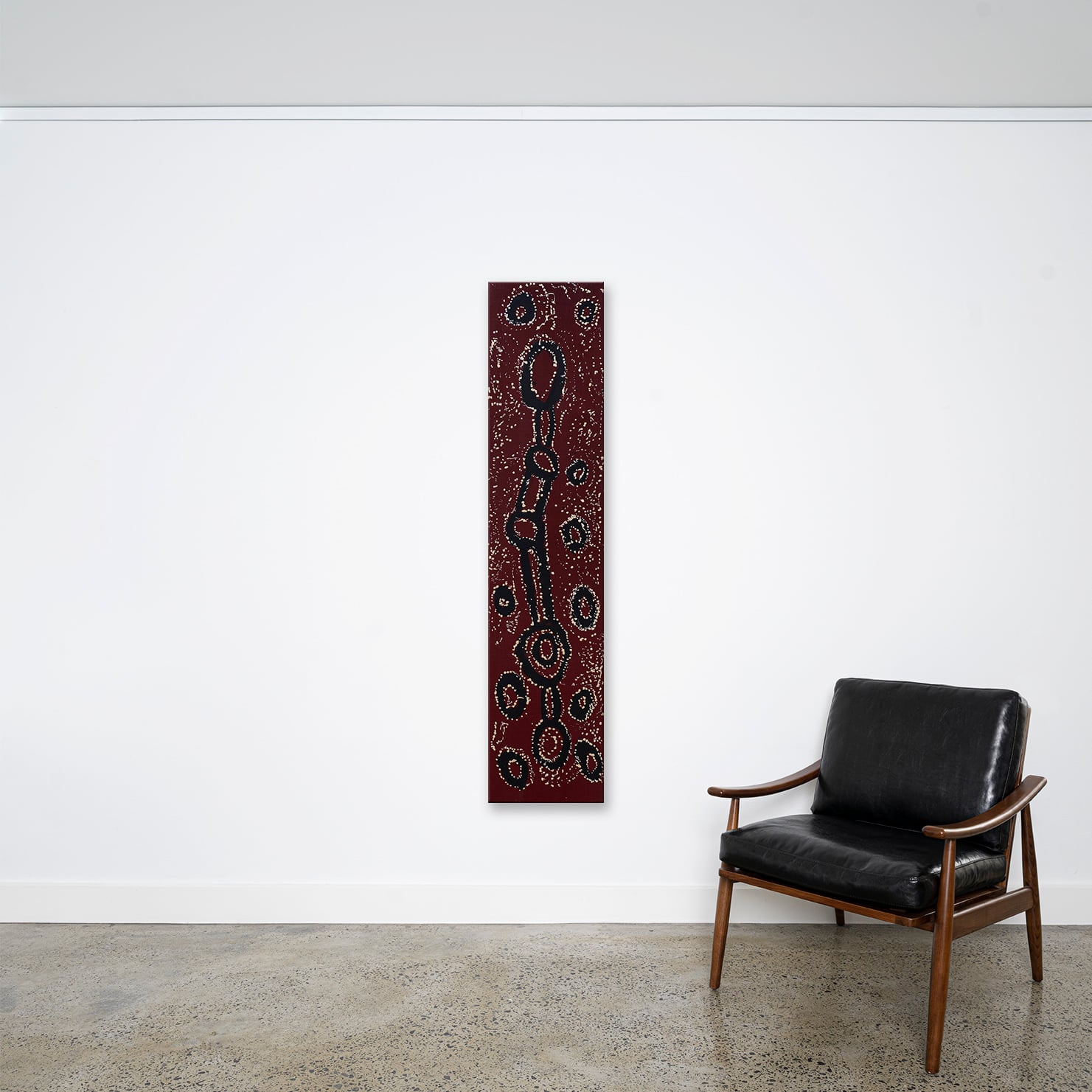
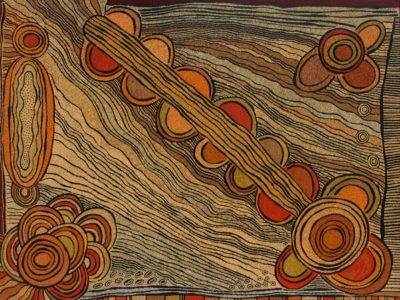
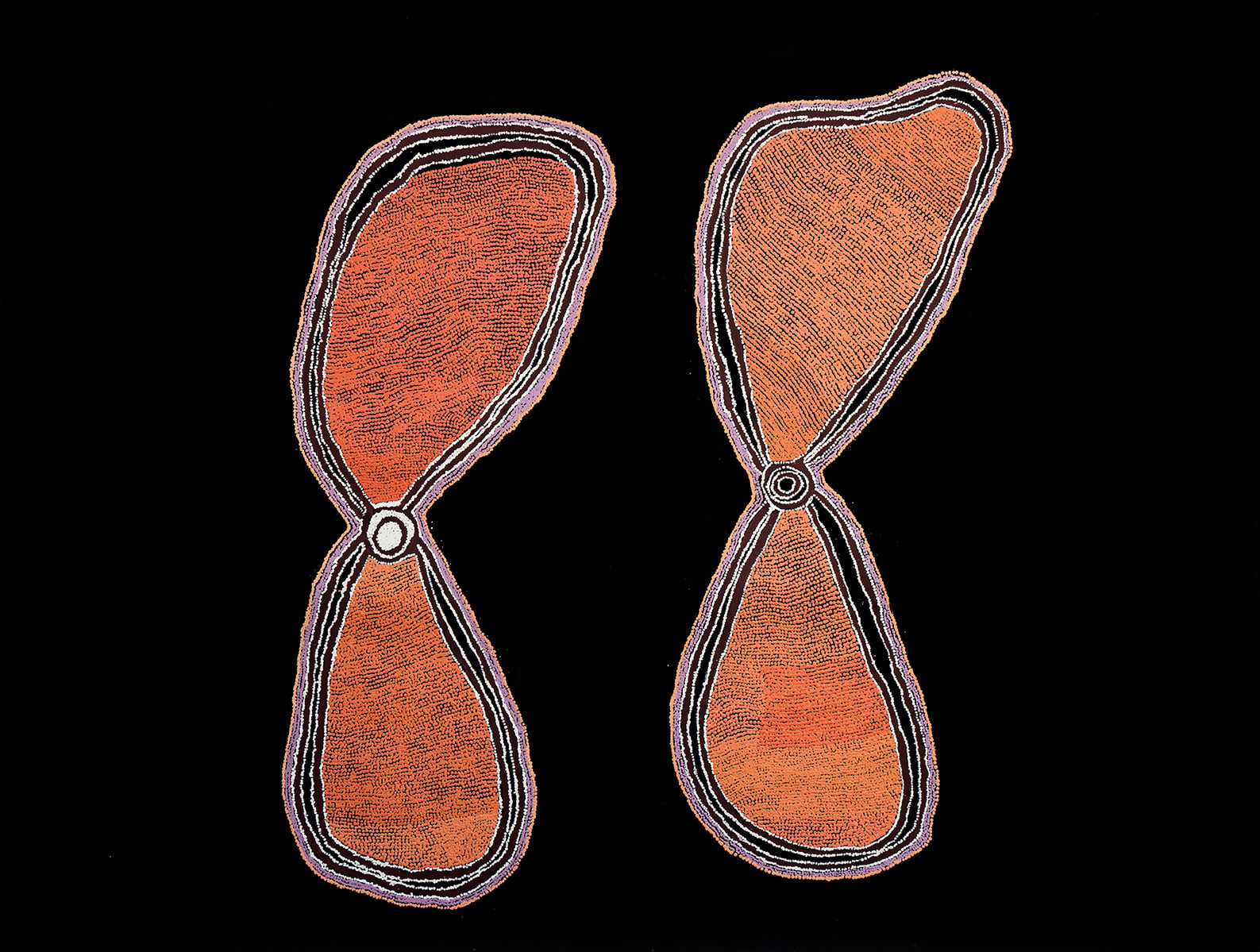
Pegleg Tjampitjinpa’s paintings are rooted in the Tingari cycle – the great Men’s Dreaming narratives of the Western Desert that describe the journeys of ancestral Tingari beings as they moved across vast tracts of country, gathering at sacred sites to perform initiation ceremonies. These journeys shaped the physical landscape: its rockholes, sandhills, sacred mountains and water soakages. Wilkinkarra (Lake Mackay), his ancestral country, is a recurring presence in his work, rendered through the abstract visual language of Pintupi ceremony.
Pegleg came to painting later in life and brought with him the perspective of an elder who had lived on country in the traditional way well into adulthood. There is an unmediated quality to his canvases – a sense that the Dreaming narratives are not being interpreted but simply declared, with the economy and confidence of deep knowledge.
HISTORICAL SIGNIFICANCE
Pegleg Tjampitjinpa belongs to a small and diminishing group of artists who bridge two worlds entirely: the pre-contact desert life of the Pintupi people and the contemporary Indigenous art movement that emerged from Papunya in the early 1970s. He is named in two of the most important historical accounts of the Gibson Desert – W.J. Peasley’s Bindibu Country (1975) and Douglas Lockwood’s The Lizard Eaters (1964) – making him a documented figure in Australian cultural history long before he became a painter.
The 1962 National Geographic photograph by anthropologist Donald Thomson – depicting Pegleg and Paddy Japanangka Lewis as warriors stepping out of the desert for the first time – stands as one of the defining images of the last contact era. It is a rare document: a named individual, captured at the precise historical moment of transition between two worlds, who later became an artist whose paintings map those same ancestral territories.
As trustee of the Wilkinkarra Land Trust from 1984, he was a recognised custodian of one of the Pintupi people’s most sacred sites. His paintings are therefore not merely artworks: they are acts of cultural stewardship, carrying the Tingari law forward in visual form.
MARKET OVERVIEW
Pegleg Tjampitjinpa’s work is valued for its authenticity, historical grounding, and direct connection to the formative Papunya Tula tradition. His inclusion in Papunya Tula: Genesis and Genius at the Art Gallery of New South Wales in 2000 – one of the most important surveys of the movement ever mounted – positions him firmly within the historical canon. As one of the last senior Pintupi men to have lived a fully traditional life before contact, and as a documented figure across two published books and a National Geographic article, his works carry a depth of provenance rarely found in contemporary Indigenous art.
With his passing in 2006, the supply of his work is fixed and finite. Each piece that comes to market is both a cultural document and a collectible of increasing rarity.
SELECTED EXHIBITION HISTORY
COLLECTIONS
Works by Pegleg Tjampitjinpa are held in major public and private collections throughout Australia and internationally. His standing as a Wilkinkarra Land Trust trustee, his documented historical presence in the Western Desert record, and his inclusion in the seminal 2000 AGNSW survey underpin sustained institutional and collector interest in his work.
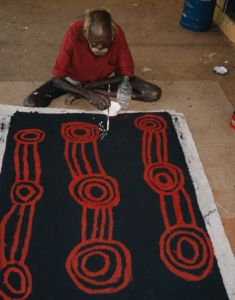
We are proud to present this historic collection: Exhibition Statement: BEFORE THE CROSSING brings together an extraordinary collection of early and highly significant Western Desert paintings from the personal collection of Christopher Simon OAM – works that have quietly lived for decades in his Northern Territory home, rarely seen beyond intimate… Continue reading
Continue reading