UPCOMING
4 to 6 November 2026
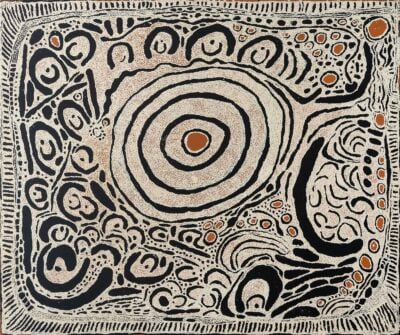
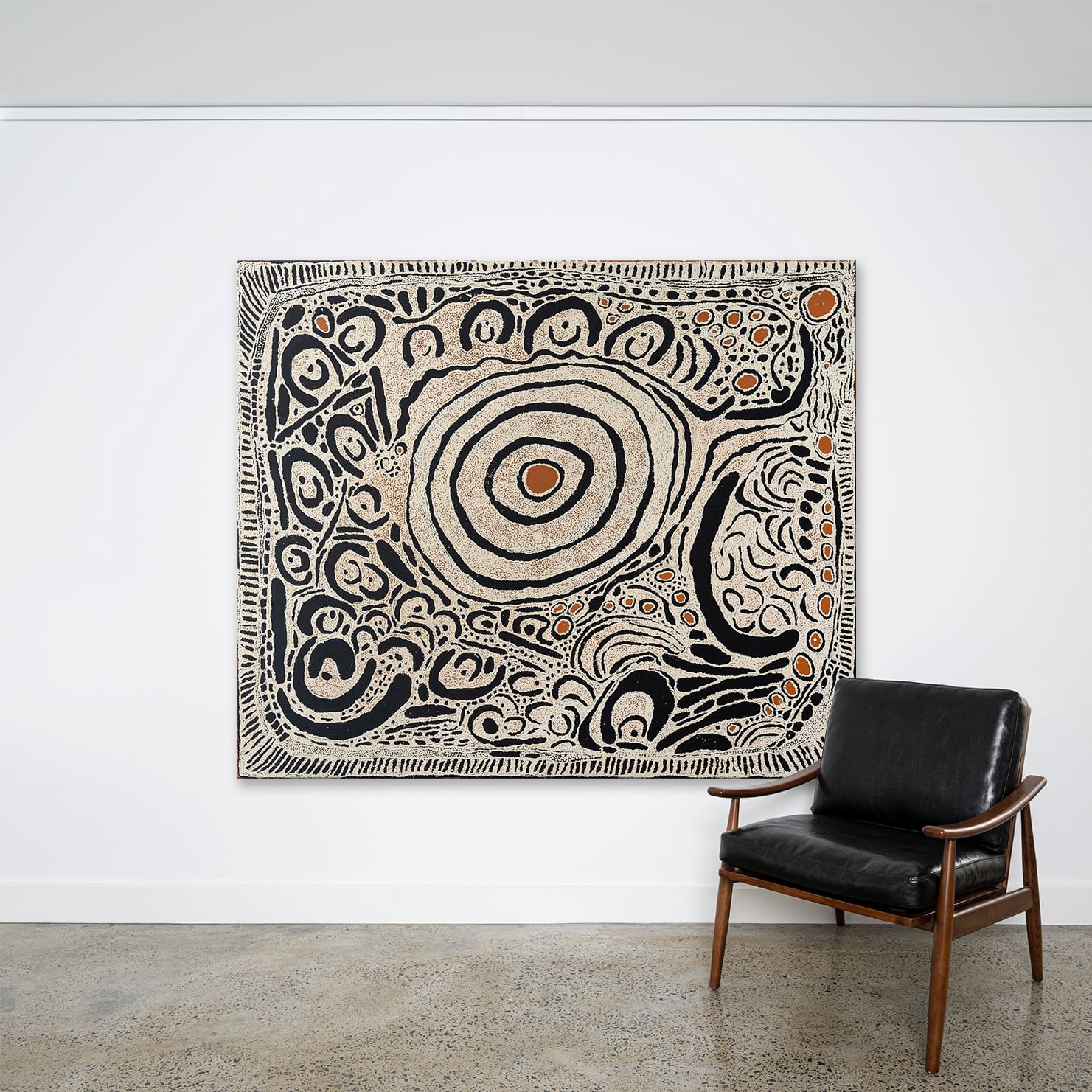
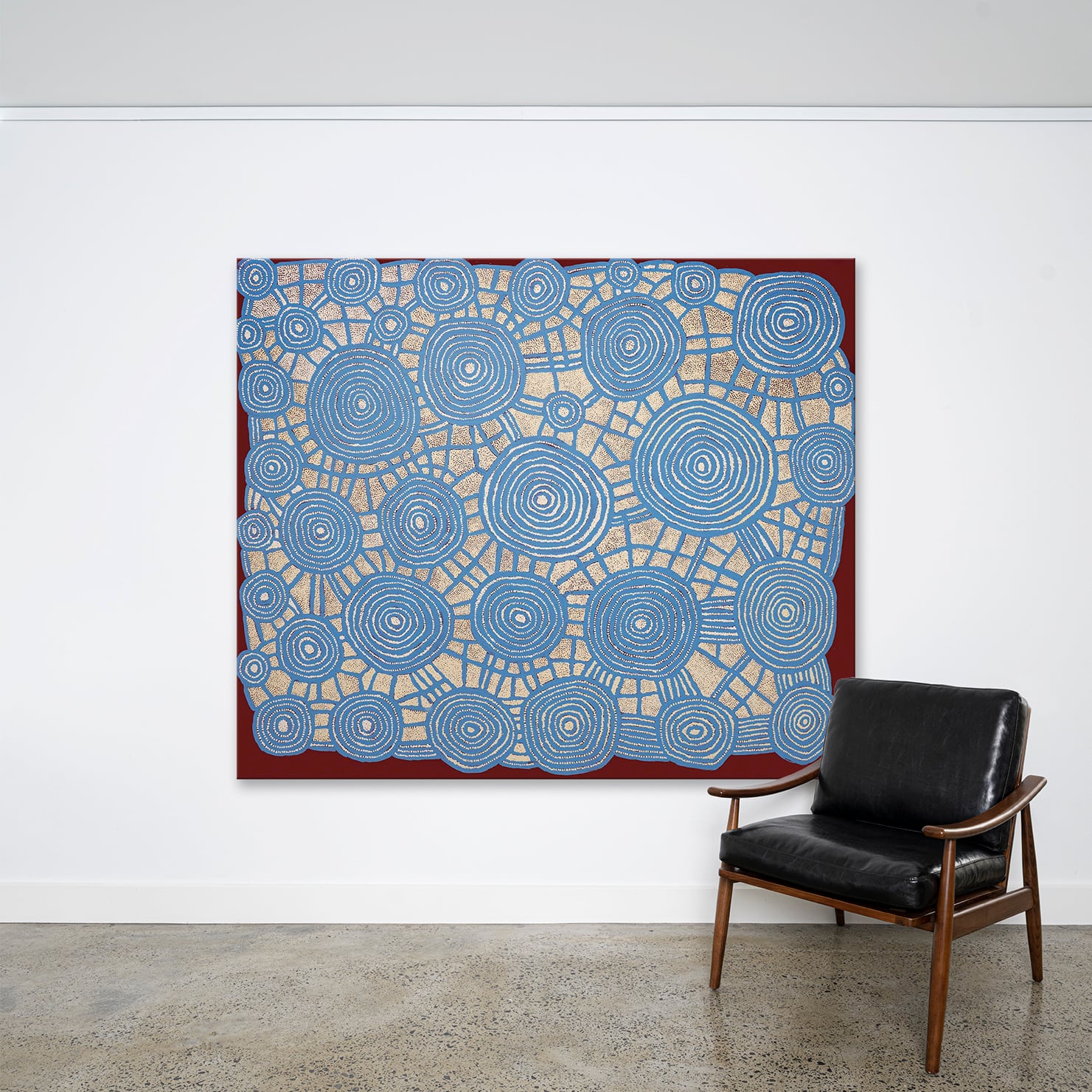
Acrylic on Linen
152 x 183 cm
A$75,000 Buy Now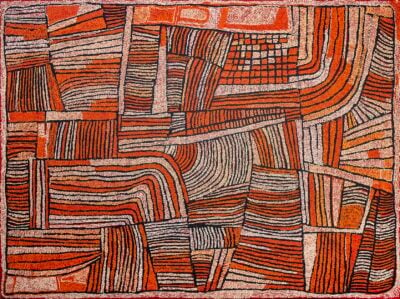
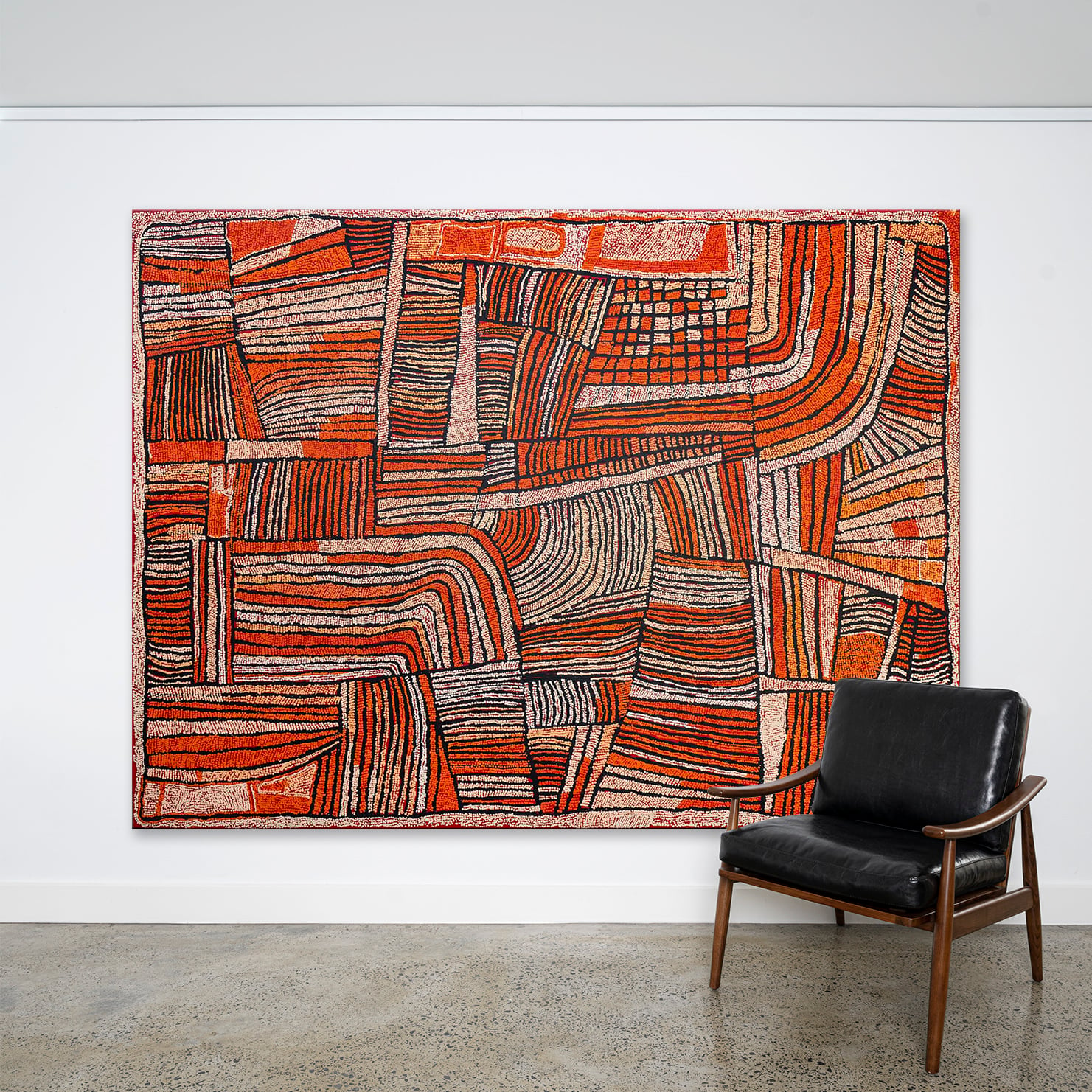
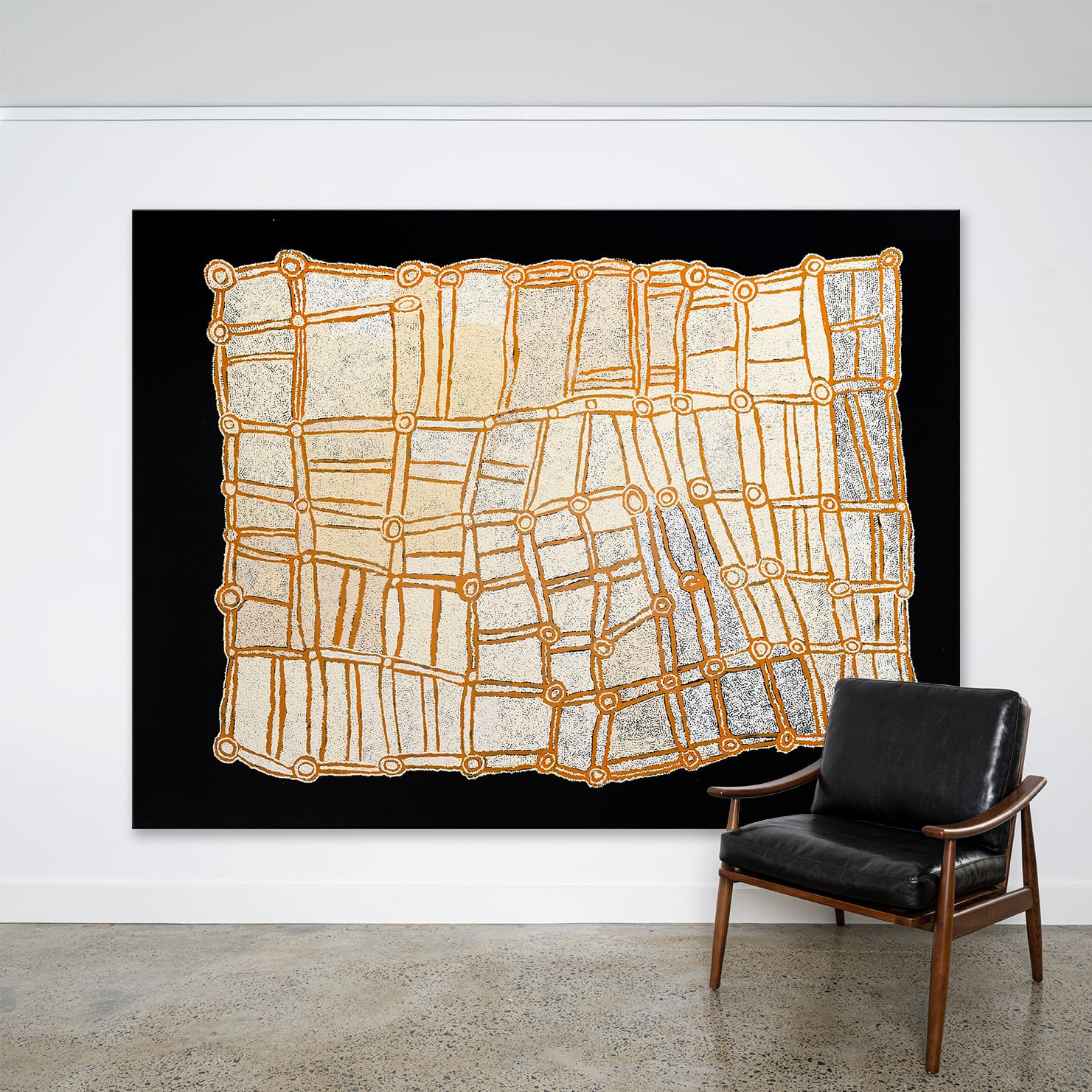
Acrylic on Linen
182 x 244 cm
A$160,000 Buy Now
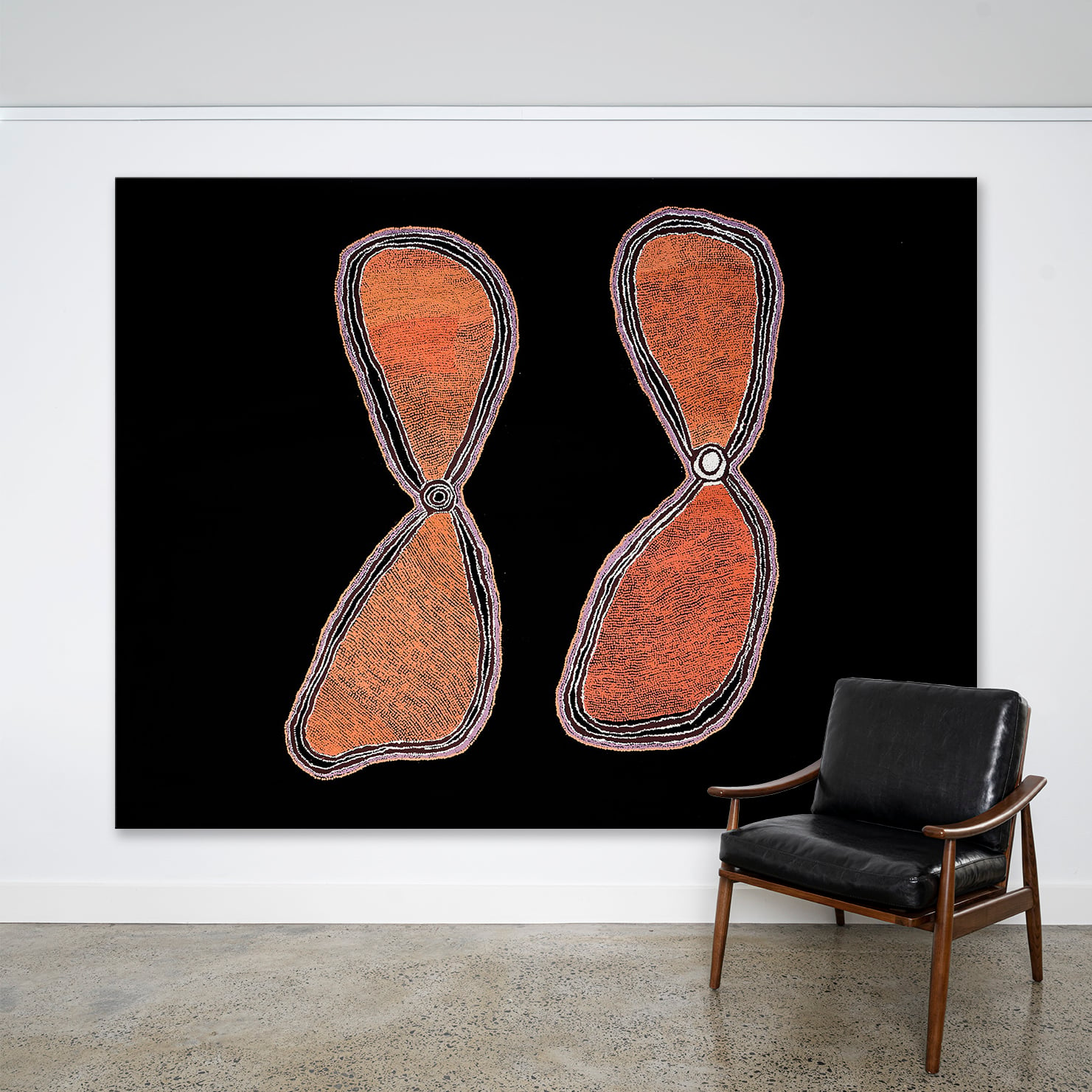
Acrylic on Linen
182 x 244 cm
A$135,000 Buy Now
Acrylic on Linen
183 x 244 cm
A$135,000 Buy Now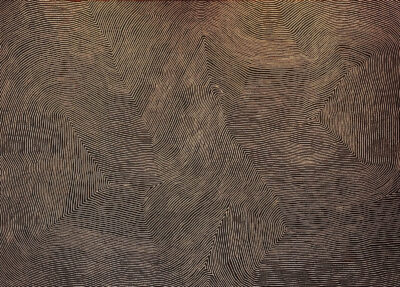
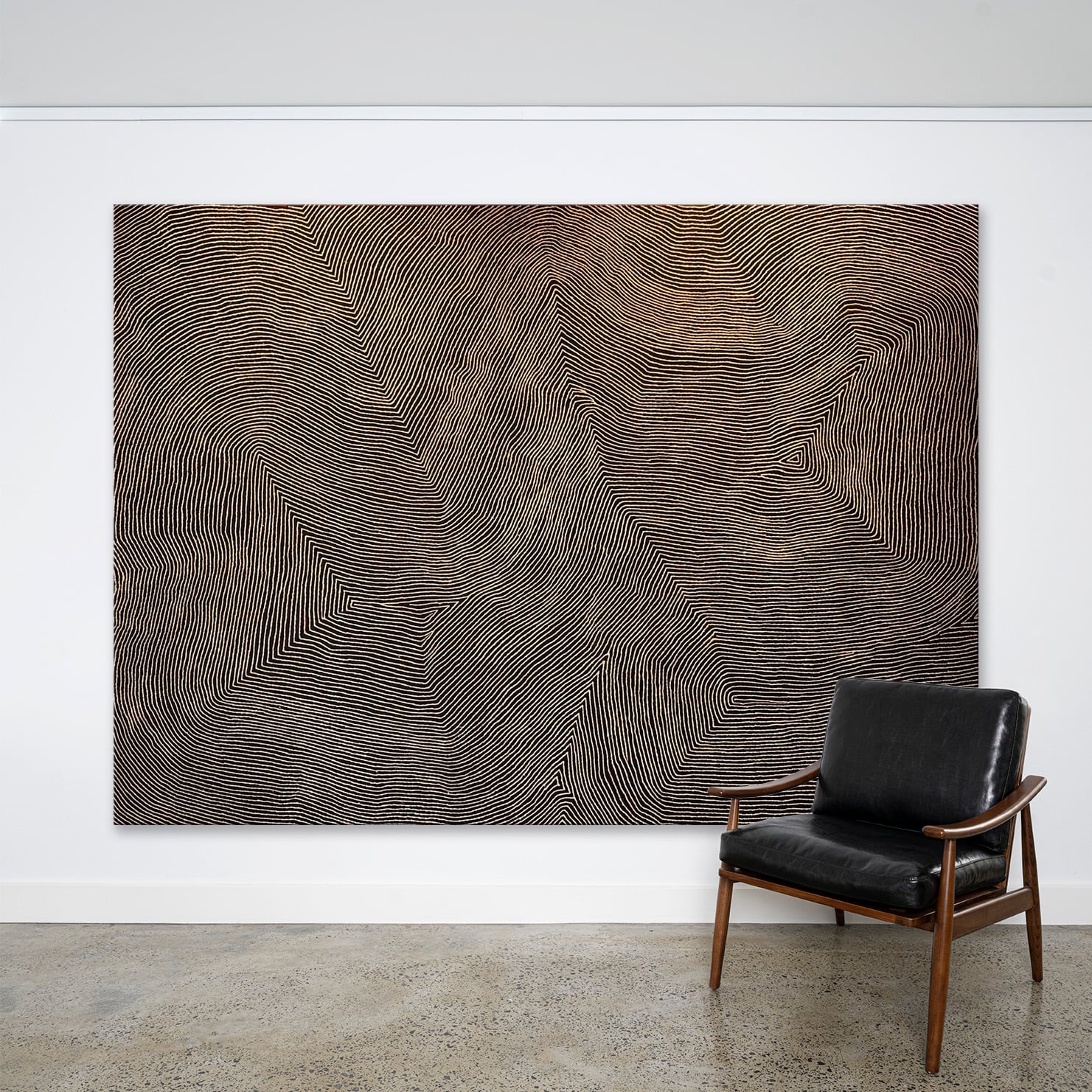
Acrylic on Linen
183 x 244 cm
A$150,000 Buy Now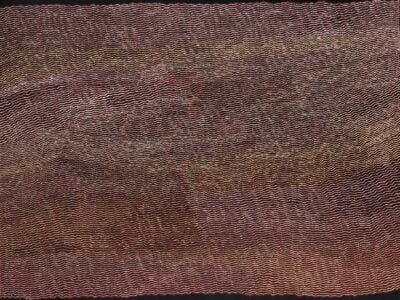
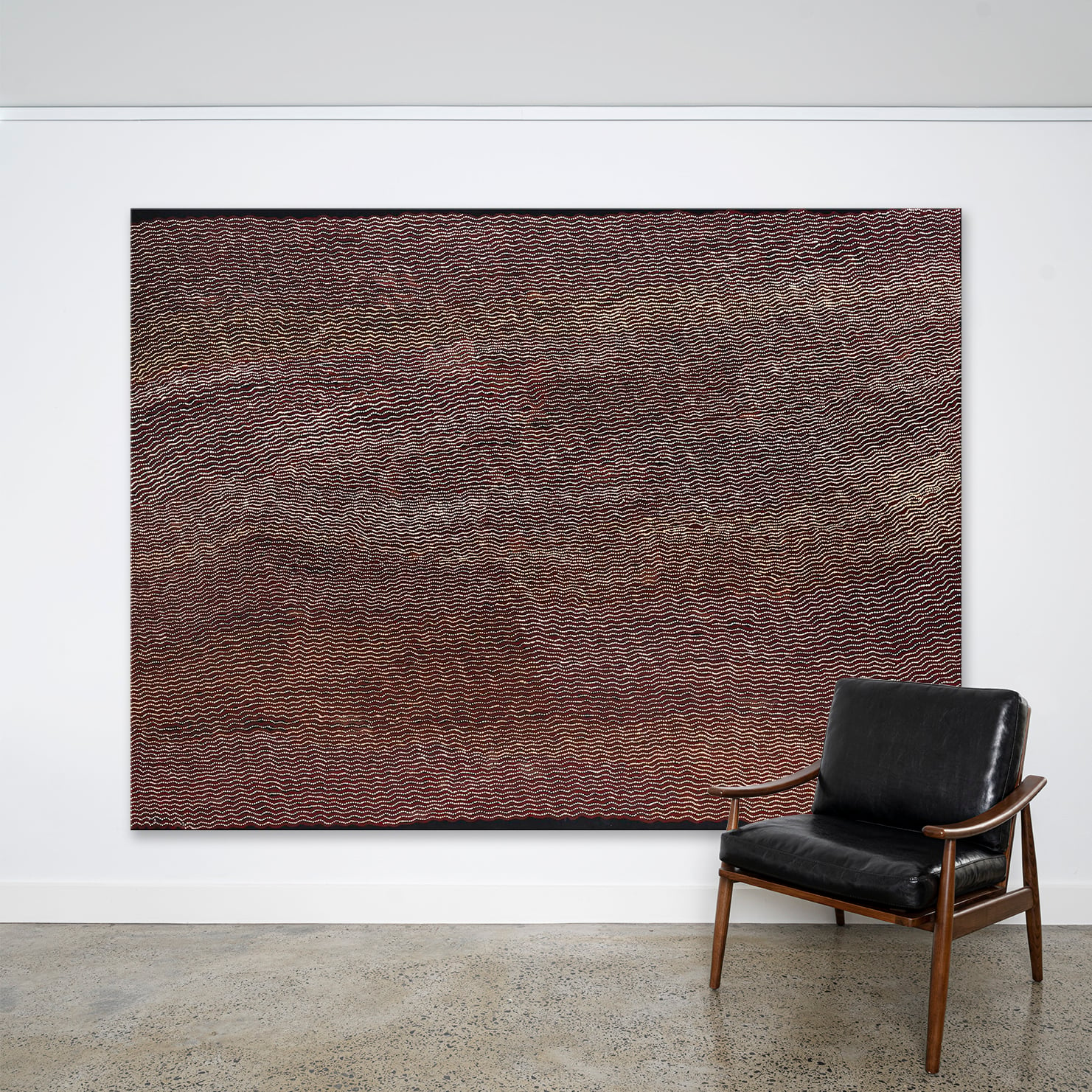
Acrylic on Linen
183 x 244 cm
A$135,000 Buy Now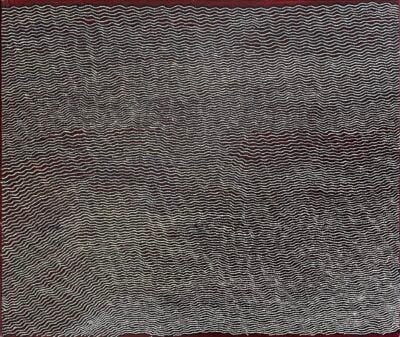
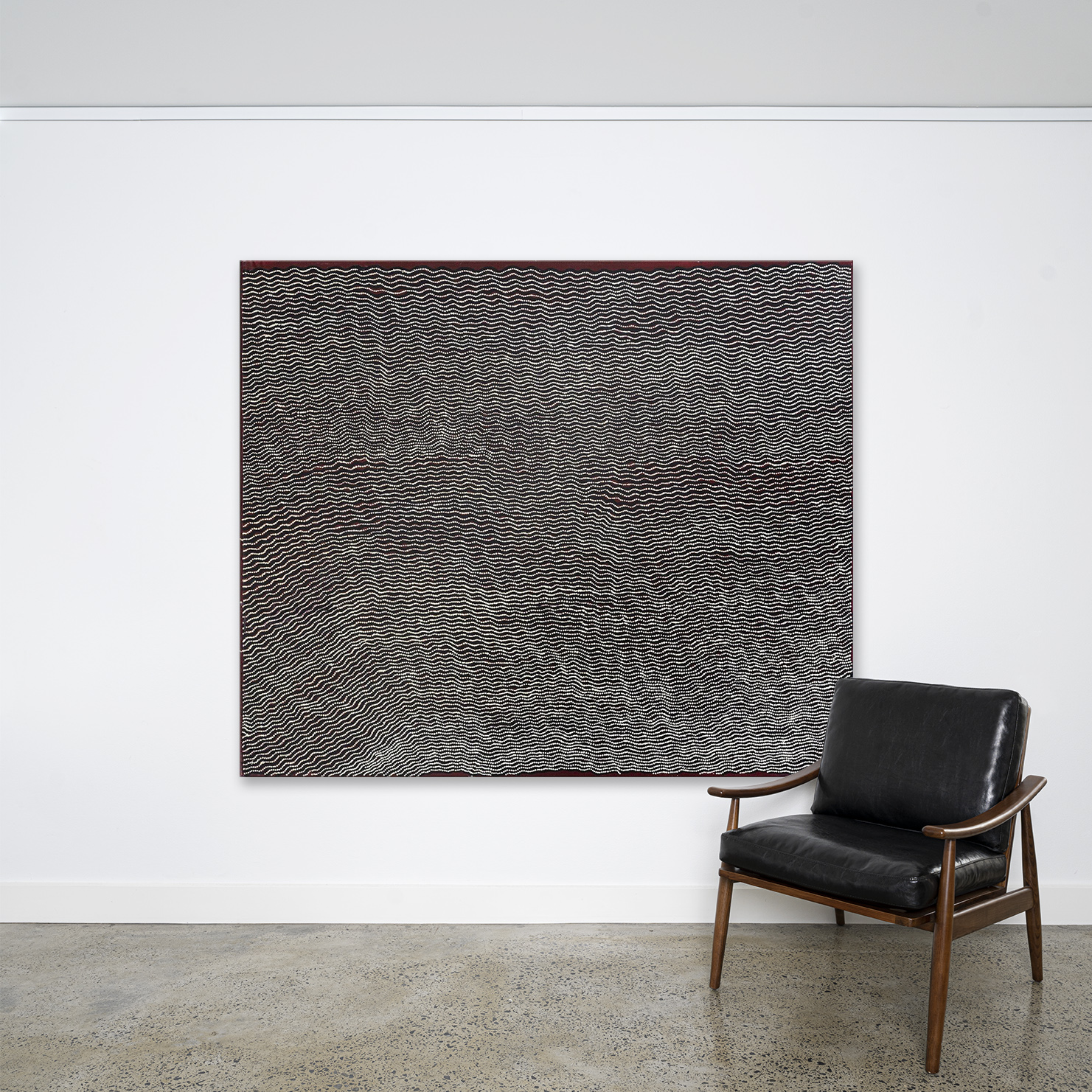
Acrylic on Linen
152 x 183 cm
A$35,000 Buy Now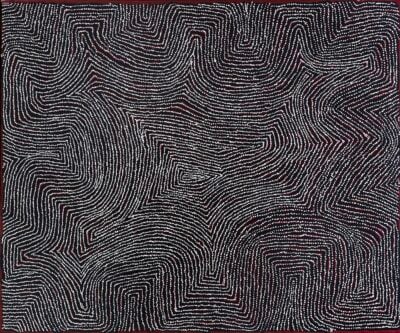
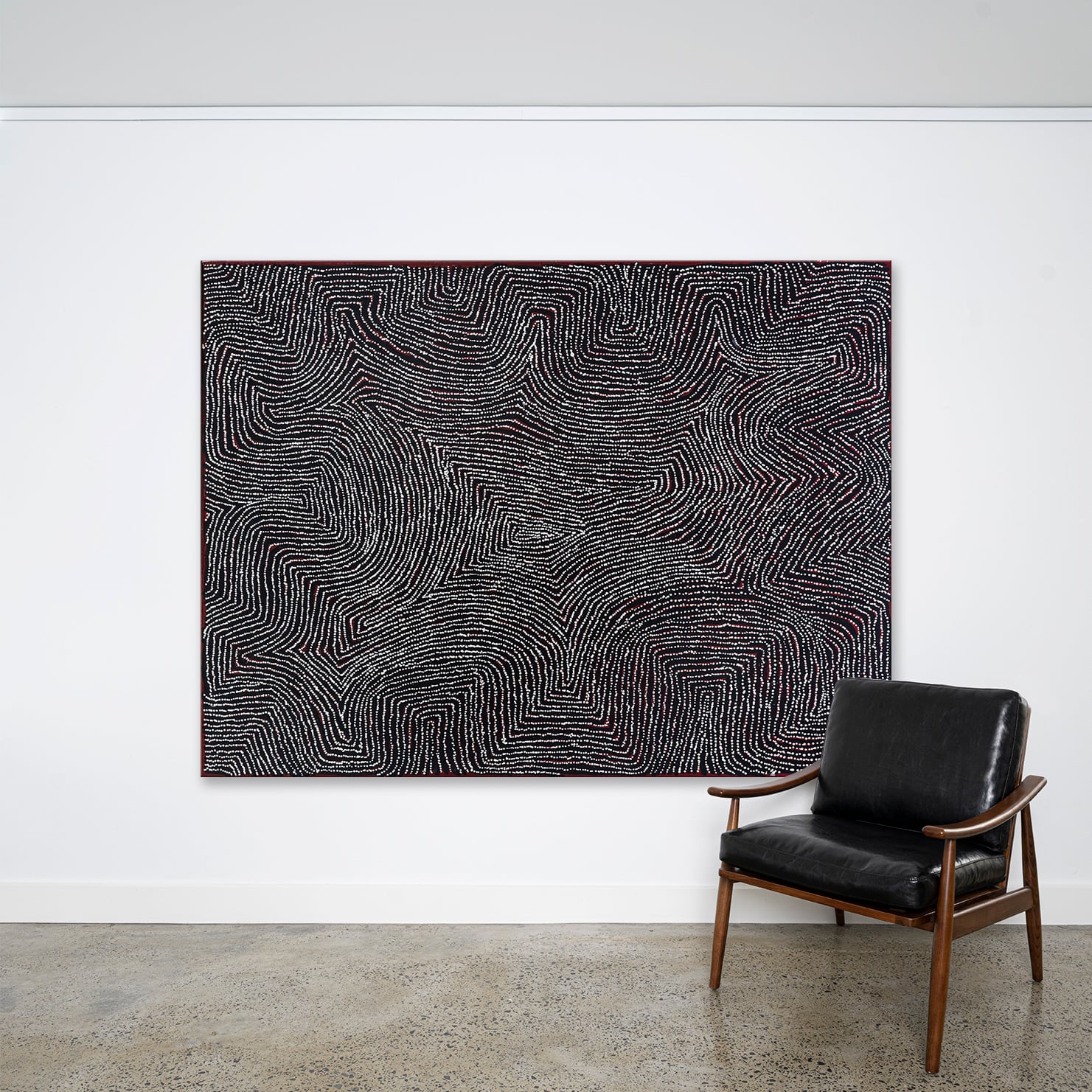
Acrylic on Linen
152 x 183 cm
A$55,000 Buy NowAcrylic on Linen
153 x 182 cm
Sold Sold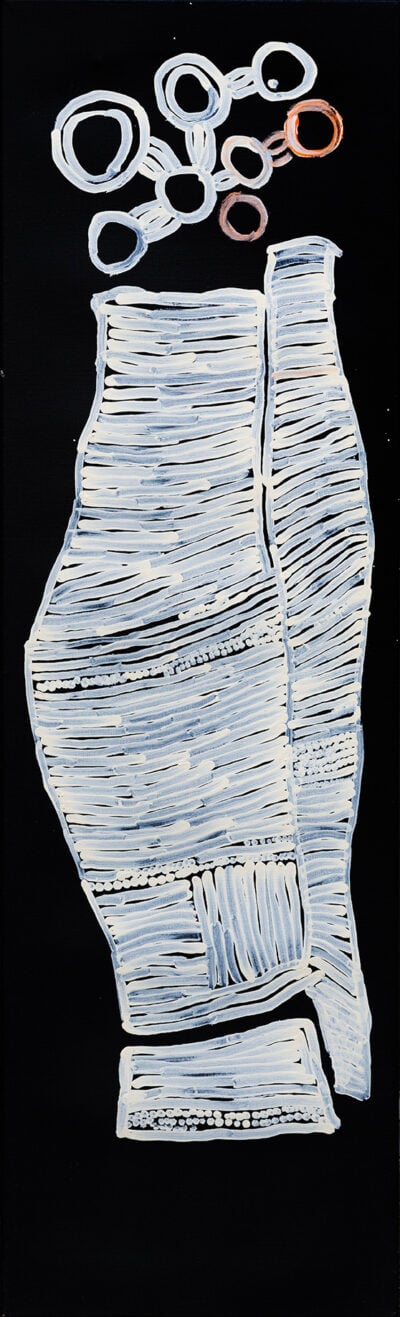
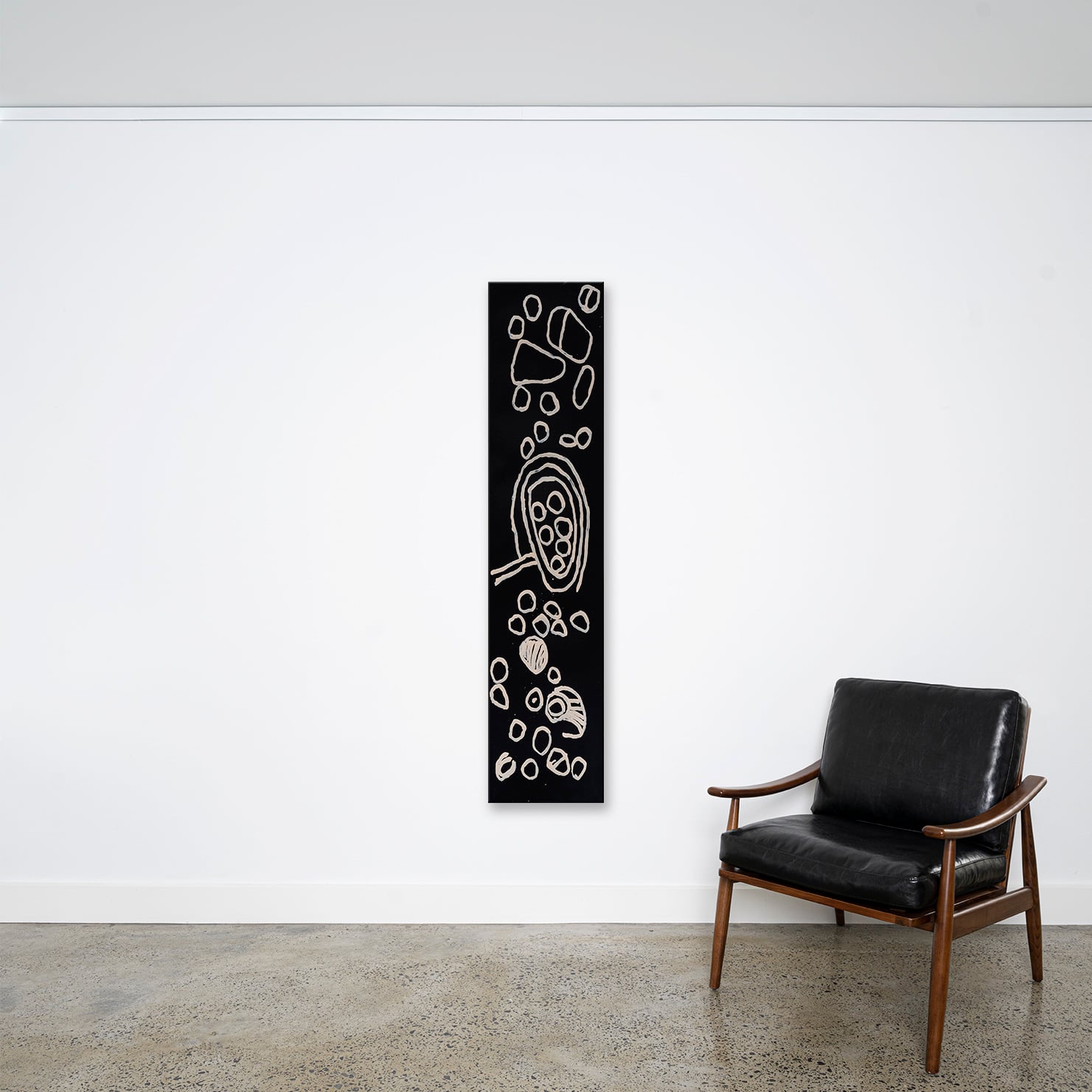
Acrylic on Linen
153 x 46 cm
A$18,000 Buy Now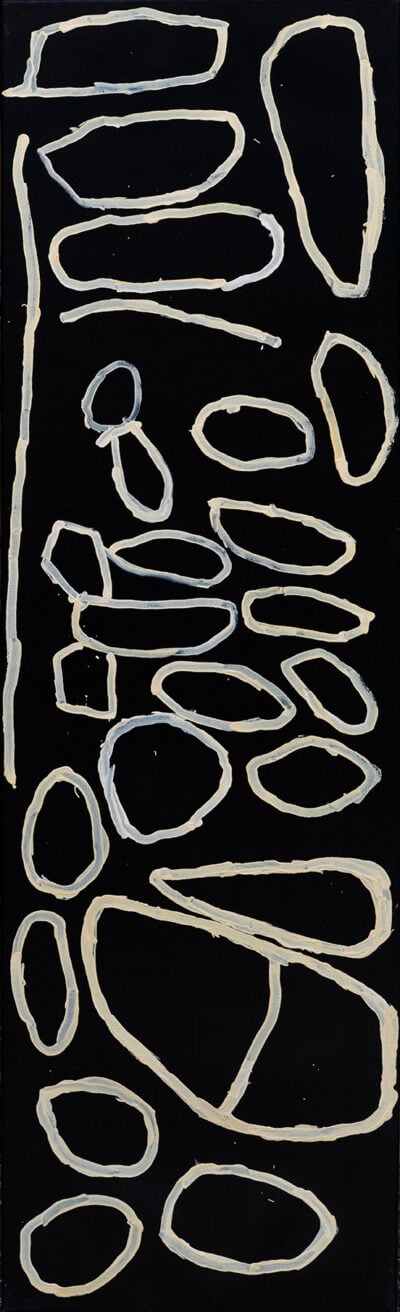
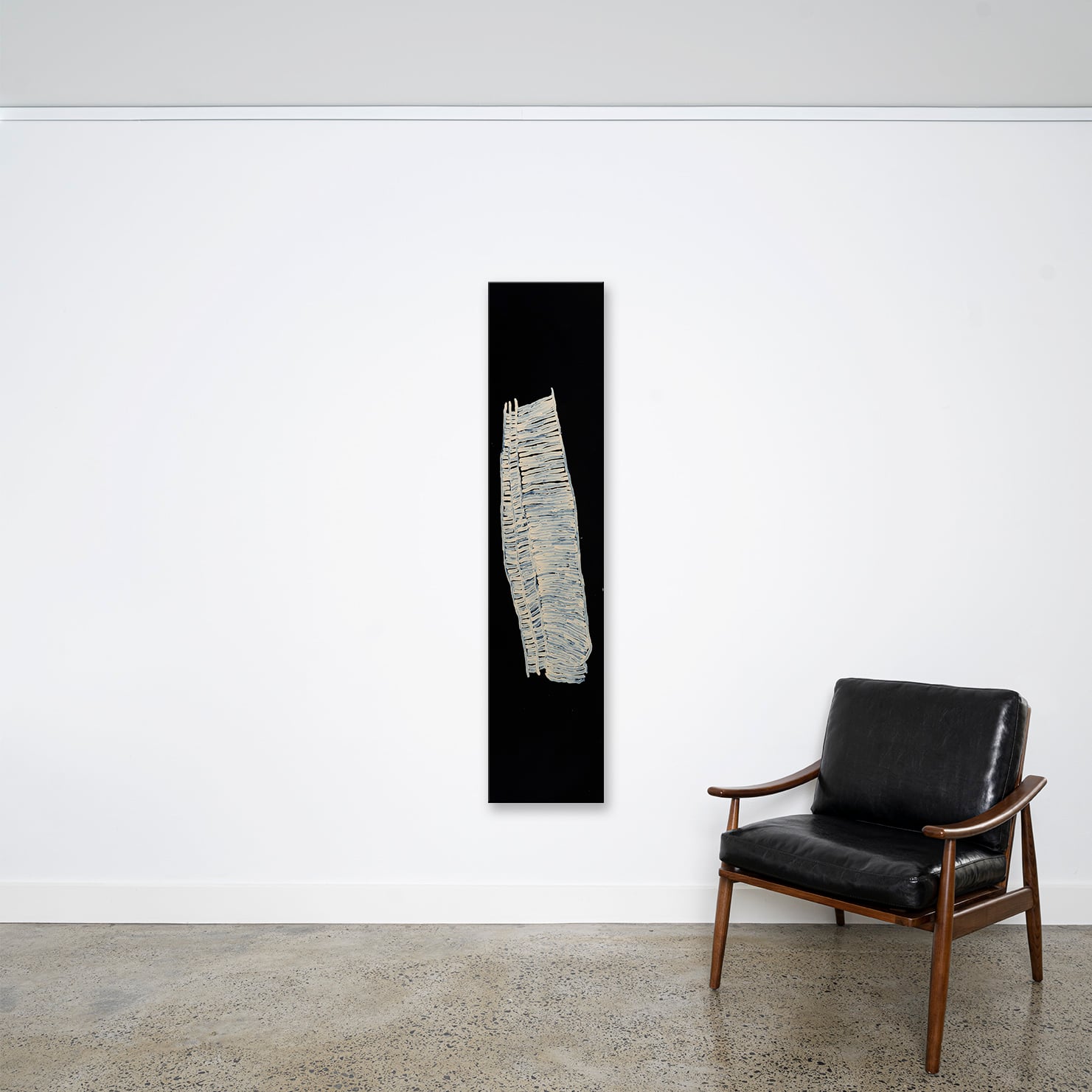
Acrylic on Linen
153 x 46 cm
A$18,000 Buy Now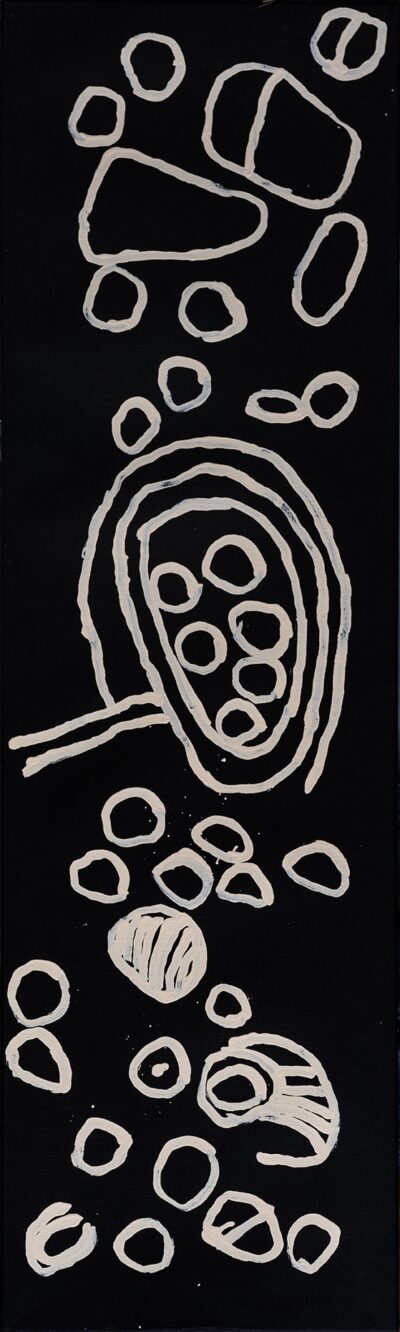
Acrylic on Linen
153 x 46 cm
A$18,000 Buy Now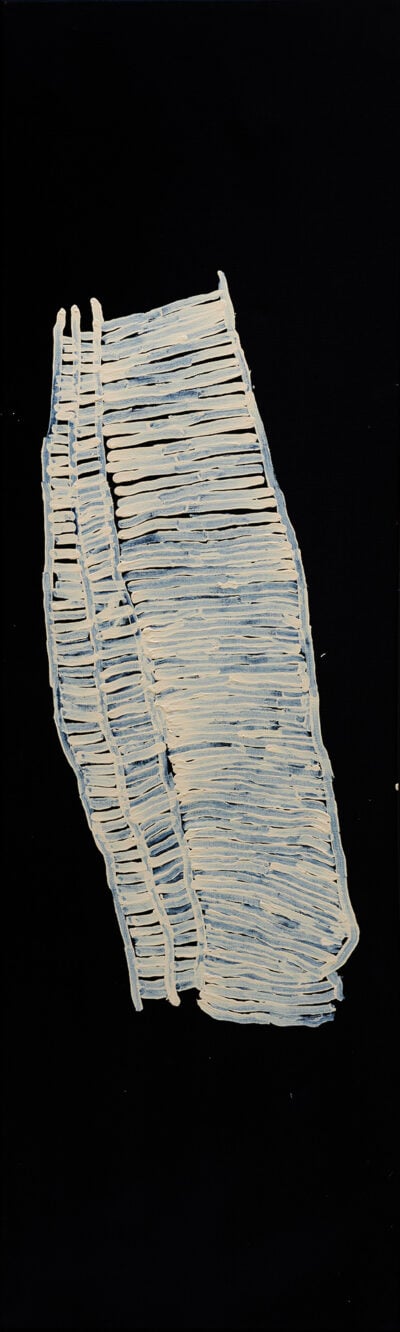
Acrylic on Linen
153 x 46 cm
A$18,000 Buy Now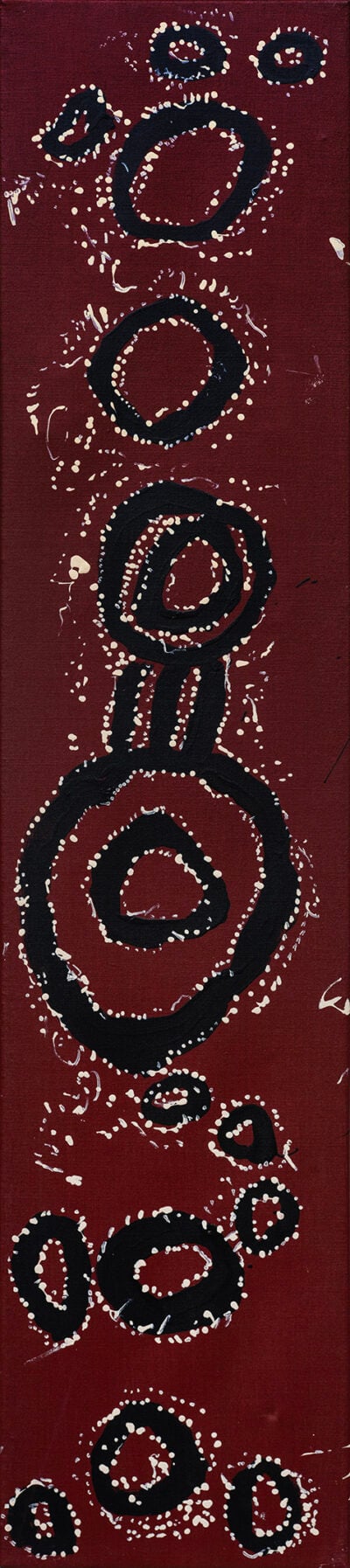
Acrylic on Linen
153 x 46 cm
A$15,000 Buy Now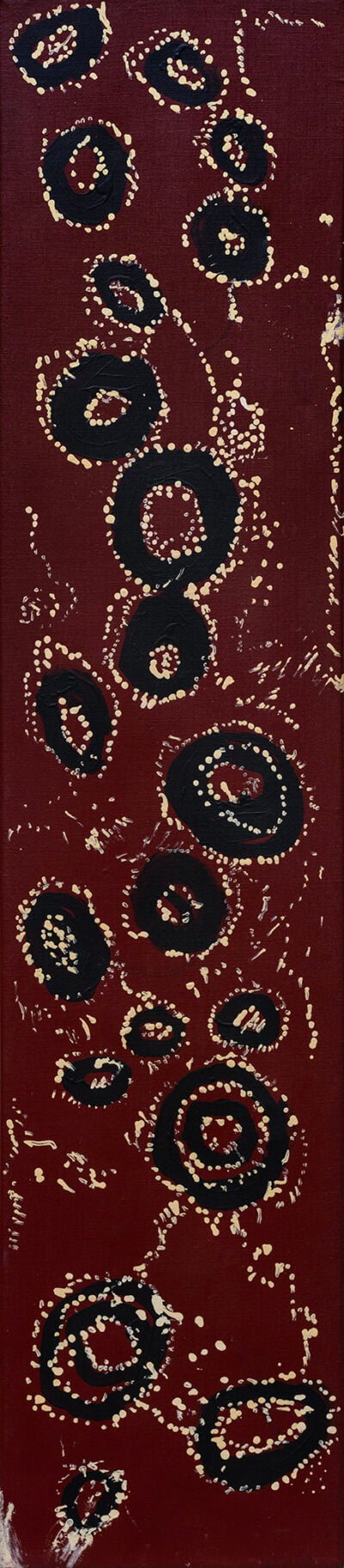
Acrylic on Linen
153 x 46 cm
A$15,000 Buy Now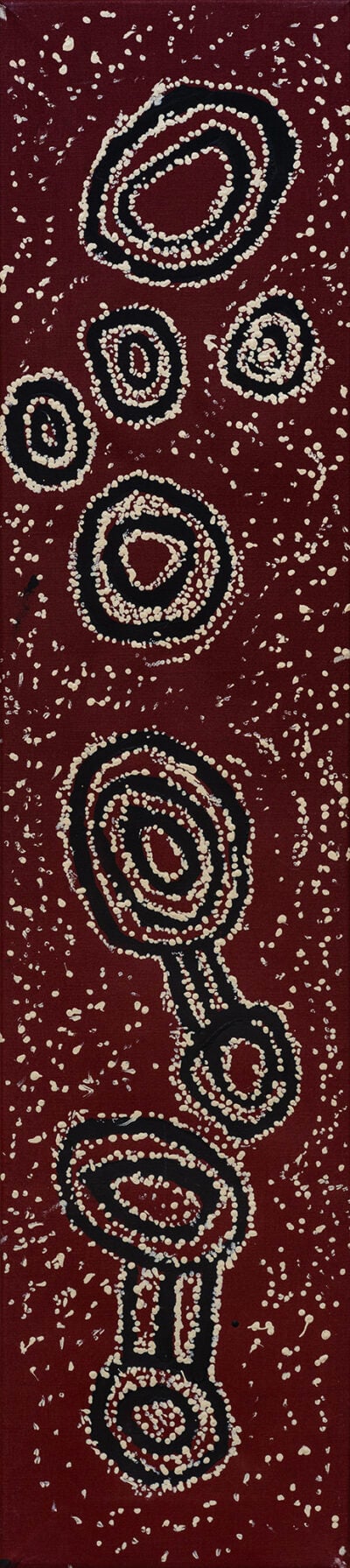

Acrylic on Linen
153 x 46 cm
A$15,000 Buy Now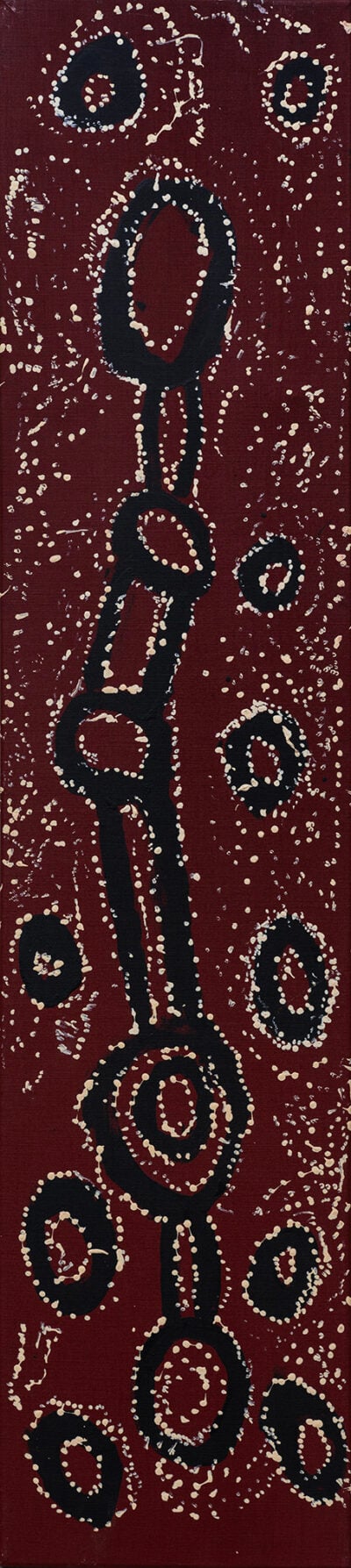
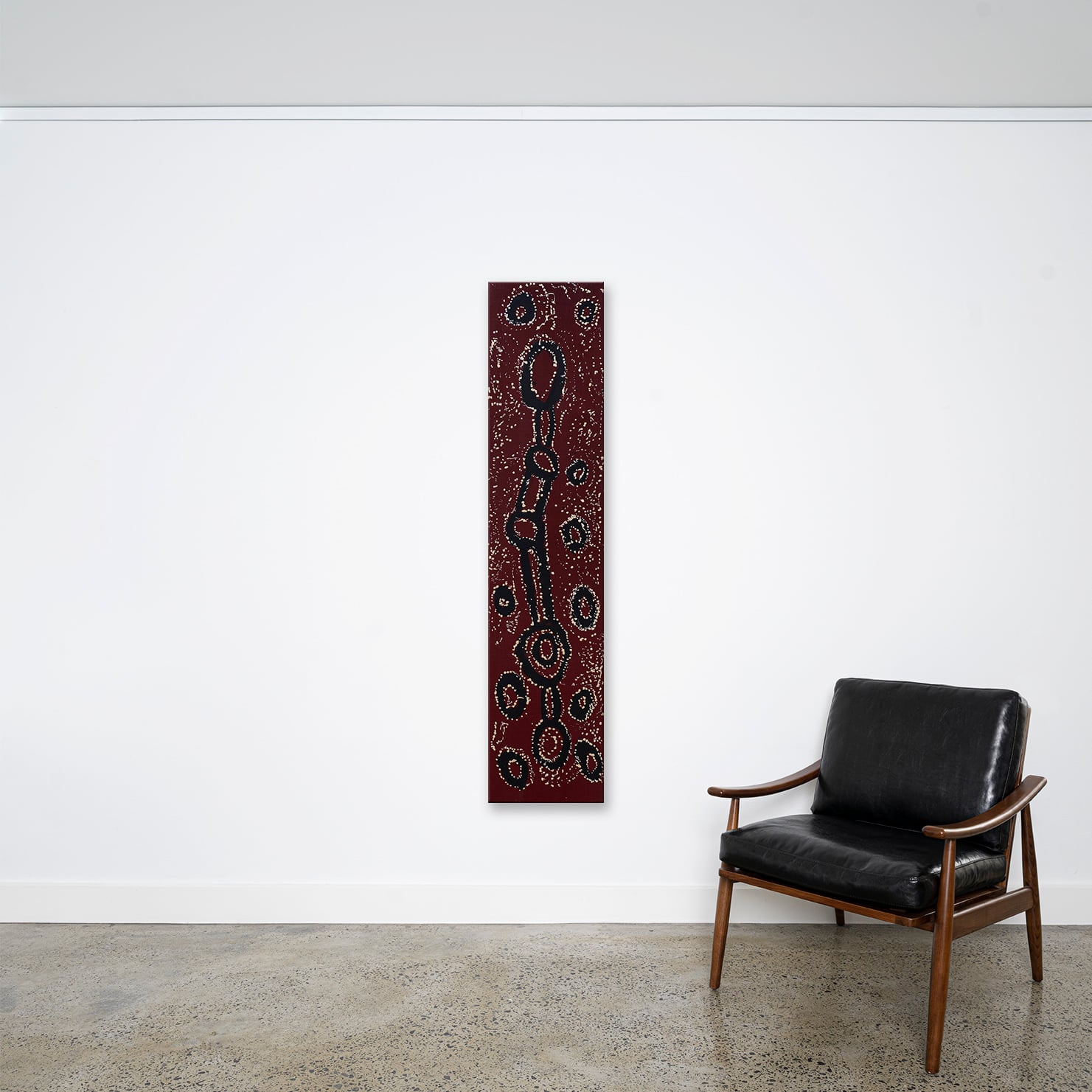
Acrylic on Linen
153 x 46 cm
A$15,000 Buy NowWe are proud to present this historic collection:
Exhibition Statement:
BEFORE THE CROSSING brings together an extraordinary collection of early and highly significant Western Desert paintings from the personal collection of Christopher Simon OAM – works that have quietly lived for decades in his Northern Territory home, rarely seen beyond intimate circles of artists, collectors and close friends. For more than twenty years, collectors and dealers alike have hoped these important paintings might one day emerge from private hands. Only now, and exclusively through Harvey Galleries, has that opportunity arrived.
The exhibition takes its title from a pivotal moment in Aboriginal art history – before the crossing of cultures, markets and international recognition transformed the landscape of contemporary Indigenous art. These paintings carry the immediacy of that earlier era: works grounded deeply in Country, ceremony, memory and ancestral knowledge, painted not for trend or commercial expectation, but as powerful acts of cultural continuation.
Collected over decades by C. Simon OAM, founder of Yanda Aboriginal Art, the exhibition reflects a lifetime spent building trusted relationships with some of Australia’s most revered desert artists. Simon established Yanda in the late 1990s and became widely respected for his commitment to ethical representation, scholarship and advocacy within Aboriginal art. His rural property outside Alice Springs became a gathering place and refuge for many senior artists including Mrs Bennett, Tommy Watson, Naata Nungurrayi and Walala Tjapaltjarri. In 2019, Simon was awarded the Medal of the Order of Australia for his services to the visual arts and his support of Aboriginal art and artists.
The artists represented in BEFORE THE CROSSING are among the most celebrated figures of the Western Desert movement: Mrs Bennett (Nyurapayia Nampitjinpa), Pegleg Tjampitjinpa, George Ward Tjungurrayi, Paddy Lewis Japanangka, Kenny Williams Tjampitjinpa, Naata Nungurrayi and John John Bennett Tjapangati. Their works embody both individual mastery and the shared visual language of Tjukurrpa – stories, law and knowledge carried across generations through painting.
This exhibition is not simply an offering of rare and important works; it is a glimpse into a deeply personal collection shaped by decades of friendship, trust and custodianship. Together, these paintings stand as enduring cultural records and as some of the most compelling achievements in contemporary Australian art.
Make sure you are subscribed to our VIP list to always be among the first to view a new exhibition!
September 12, 2026 , 3:00 - 5:00 pm
Aboriginal and Torres Strait Islander Cultural Warning: This page contains the name and image of a deceased First Nations artist. The artist’s photograph has been placed at the end of this biography in recognition that viewing images of deceased people may be culturally sensitive for some Aboriginal and Torres Strait Islander peoples. Please take care if you choose to continue scrolling.
Born circa 1930s
Died 2002
Region Western Desert
Language Pintupi
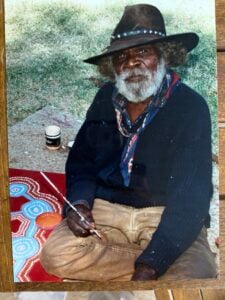
John John Bennett Tjapangati was a senior Pintupi man and ngangkari (traditional healer) of the Western Desert. Born in the Gibson Desert in the 1930s, he was raised within a strong cultural and ceremonial framework. He belonged to the generation of Pintupi men whose lives bridged the world of traditional desert living, the disruption of settlement, and the emergence of a contemporary Aboriginal painting movement that would change Australian art history.
Bennett began painting with Papunya Tula Artists in 1986. He lived for a period at Tjukurla in Western Australia, before returning to Walungurru (Kintore) in the Northern Territory, where he resumed painting with renewed intensity through the 1990s. He was married to the celebrated Papunya Tula artist Nyurapayia Nampitjinpa – widely known as Mrs Bennett – and together they were recognised not only as important painters but as respected cultural leaders and healers within the Kintore community.
His role as a ngangkari extended beyond the studio: Bennett worked closely with the Kintore Clinic, practising traditional healing in cooperation with Western medical services – an expression of the depth and authority of his knowledge within Pintupi society. He was, in every sense, a man of law: a keeper of ceremony, a healer, a painter, and a custodian of the Dreaming narratives that define Pintupi relationship to Country.
ARTISTIC PRACTICE
Bennett’s paintings are most closely associated with the Tingari Cycle – the great body of ancestral narratives that map the travels of Tingari men across the Western Desert, linking ceremonial sites, law, movement, and memory across Country. In his work, these stories are translated into powerful visual fields of rhythm, repetition, and measured movement. His compositions frequently trace routes between significant Pintupi sites – Tjukurla, Pirrmalnga, Mitukatjirri – rendering Country not as landscape in a Western sense, but as a living, storied, and spiritually activated terrain. Roundels mark rockholes; lines of dots carry the paths of ancestral beings; the whole surface becomes a kind of mapped ceremony.
His style is distinguished by finely controlled dotting, measured geometry, and a strong sense of ceremonial structure. Layers of repeated marks generate a shimmering optical surface, evoking both the presence of ancestral forces and the movement of Tingari figures across desert space. His practice belongs firmly to the mature Papunya Tula tradition, yet his canvases carry an intensely personal concentration and gravity – a stillness that reflects a life grounded in law, healing, and custodianship of Country.
COLLECTIONS
National Gallery of Australia, Canberra
Holmes à Court Collection, Perth
Major private collections, Australia and internationally
AUCTION RESULTS
Bennett’s work has appeared at auction through major Australian and international houses.
MARKET OVERVIEW
John John Bennett Tjapangati’s market reflects the strength and rarity of senior Papunya Tula painters from the Western Desert tradition. With 22 works appearing at auction since his passing in 2002, his artworks are in limited supply – and that scarcity is underpinned by his institutional standing: works held at the National Gallery of Australia and the Holmes à Court Collection confirm his position within the canon of significant Indigenous Australian art.
Aboriginal and Torres Strait Islander Cultural Warning: This page contains the name and image of a deceased First Nations artist. The artist’s photograph has been placed at the end of this biography in recognition that viewing images of deceased people may be culturally sensitive for some Aboriginal and Torres Strait Islander peoples. Please take care if you choose to continue scrolling.
Born circa 1950
Died 2020
Region Western Desert
Language Pintupi
Kenny Williams Tjampitjinpa was born around 1950 at Iliya, near present-day Kiwirrkura, in the Western Desert of Western Australia – the traditional homeland of the Pintupi people. He was the eldest son of the celebrated painter Naata Nungurrayi and her first husband, Pilamartitja Tjangala, who died of thirst in the desert approximately two years before the family had any contact with non-Aboriginal Australians.
As a young boy, Kenny spent his early years travelling nomadically with his extended family across the remote desert around Wilkinkarra (Lake Mackay). During a period of serious drought, the family was brought in 1963 to Papunya by government patrol officer Jeremy Long.
Kenny later moved to Balgo Hills on the northern edge of the Great Sandy Desert alongside a group of Pintupi people, before returning to Papunya and then transferring with his younger sibling Ronnie Tjampitjinpa to the Intinti outstation west of Kintore. In his final years, Kenny lived in Alice Springs while undergoing treatment through the renal program. He passed away in 2020.
ARTIST PRACTICE
Kenny Williams began his painting career joining Papunya Tula Artists and working on Country centred around Kiwirrkura and sites including Walawala – his principal homestead – and Yirrukurlu, his father’s Country south of the Pollock Hills.
His primary Dreaming subjects draw on the stories of the Kuniya (python) – particularly the narrative of two python ancestors who travelled from the east to Karrilwarra, a rockhole and soakage water site north-west of Kiwirrkura, before journeying south-west to Wiluna. He also painted the Tingari Cycle, the body of sacred ancestral knowledge central to Pintupi men’s ceremonial life, and Ngamanpura, a swamp west of Kintore associated with the black berry of the same name.
His style is instantly recognisable: meticulously executed fine zigzag lines rendered in subtle, earthy ochres, umbers, and muted earth tones on linen or canvas. Rather than relying on the classical dotting techniques popular in early Papunya art, Kenny’s signature approach employed hyper-controlled linear geometry – rhythmic, pulsing zigzags and fine linework that mirror the ancient carvings traditionally found on ceremonial shields, boomerangs, and tjuringa (sacred stone or wooden objects). The surface rewards close and sustained looking, carrying a meditative, almost hypnotic quality that bears the full authority of that sacred ceremonial tradition.
FAMILY & ARTISTIC LINEAGE
Kenny Williams came from one of the most distinguished artistic families in the history of Australian Aboriginal art. His mother, Naata Nungurrayi, is among the most highly collected Papunya Tula women painters, achieving major auction records in her own right. His younger sibling, Ronnie Tjampitjinpa, is equally celebrated and has achieved some of the strongest results of any living Pintupi male artist. His uncle, George Ward Tjungurrayi, won the prestigious Wynne Prize at the Art Gallery of New South Wales in 2004.
Together, this lineage represents one of the most exceptional creative dynasties in the history of Western Desert painting. This family pedigree significantly reinforces the cultural and artistic authority of Kenny’s work in the eyes of collectors and institutions alike.
AWARDS & RECOGNITION
Chairman, Papunya Tula Artists
Kenny served as Chairman of Papunya Tula Artists for several years, a position of considerable cultural and institutional authority within the cooperative that gave birth to the Western Desert painting movement.
2000 Telstra National Aboriginal and Torres Strait Islander Art Award (NATSIAA) — Overall Winner
Kenny Williams won the major prize at the 17th National Aboriginal and Torres Strait Islander Art Award in 2000 with Snake Tjukurrpa – a masterwork in synthetic polymer paint on linen that directly channelled his principal ancestral narratives. Coming just a year after he stepped down from his influential role as Chairman, the award cemented his reputation firmly among the top tier of contemporary Australian artists. The prize-winning Snake Tjukurrpa was acquired by the Museum and Art Gallery of the Northern Territory (MAGNT) upon award, where it remains in the permanent collection.
INSTITUTIONAL COLLECTIONS
SELECTED EXHIBITION HISTORY
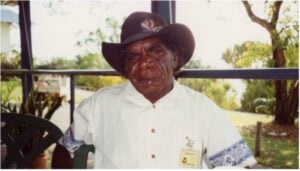
Aboriginal and Torres Strait Islander Cultural Warning: This page contains the name and image of a deceased First Nations artist. The artist’s photograph has been placed at the end of this biography in recognition that viewing images of deceased people may be culturally sensitive for some Aboriginal and Torres Strait Islander peoples. Please take care if you choose to continue scrolling.
Born circa 1945
Died 2023
Region Pintupi
Language Pintupi
George Ward Tjungurrayi was born around 1945 near Kiwirrkura in the Gibson Desert of Western Australia, on the country of his Pintupi ancestors. His ancestral country lies west of Kintore, centred on the sacred waters of Karrkurritinytja (Lake Macdonald). His older brother is Willy Tjungurrayi – also a senior Pintupi painter – and his sister is the internationally celebrated Naata Nungurrayi, making the Tjungurrayi family one of the most distinguished artistic lineages in the history of Western Desert painting.
In 1962, George was brought to Papunya following contact with the Northern Territory welfare patrol led by Jeremy Long, which had found his family living traditionally in a remote stretch of Gibson Desert. He settled into Papunya life, taking on work around the settlement, and married Nangawarra – a woman from one of the most prominent Pintupi families. The couple raised their children across several communities – Warburton, Docker River, Warakurna – before making their home at Walungurru (Kintore).
George Ward first began painting for Papunya Tula Artists in 1976, at the West Camp of Papunya, working alongside Joseph Jurra Tjapatjarri and Ray James Tjangala. A deeply reserved man, entirely at home in the desert and openly proud of it – ‘I’m a bush man, me’ – he produced a series of elegant concentric roundel compositions in those early years. His practice deepened considerably following the passing of his elder kinsman Yala Yala Gibbs Tjungurrayi, a celebrated Papunya Tula founder, an event that transferred full cultural and ceremonial custodianship squarely to George Ward. The canvases he then began producing were, as journalist Nicolas Rothwell wrote, ‘like nothing else that had come before in the desert art movement: sombre, cerebral, full of grave intellect.’
George Ward passed away on 22 September 2023, leaving a body of work celebrated in institutions across Australia and the world.
ARTISTIC PRACTICE
George Ward Tjungurrayi’s paintings are rooted in the Tingari cycle – the great Men’s Dreaming narratives of the Western Desert that describe the journeys of ancestral beings across vast tracts of country, gathering at sacred sites to perform initiation ceremonies. His primary subject is Karrkurritinytja (Lake Macdonald) and the routes of Tingari men through the surrounding landscapes west of Kintore – country he knew intimately from childhood.
His visual language is one of geometric precision and meditative repetition. He first blocks out distinct fields across the canvas, then fills each one with tight parallel lines – wavy paths, tilted circles, chevrons – drawn with meticulous concentration over several days of work. Then he takes up his dotting stick. After days of careful detailing, a shimmering optical surface emerges that rewards sustained attention: simultaneously abstract and deeply geographical, mapping country through the logic of ceremony rather than topography.
Colour carries cultural meaning in his palette. Pink evokes country that is ‘strong and balanced’; black speaks of health and vitality, and of winter landscape. His restricted, earthy tones amplify the structural rigour of each composition, giving his work a gravity and stillness that distinguishes it from the exuberant dotwork of earlier Papunya painting.
“He’s got it – both the Pintupi grounding, and the genius to paint in ways that are innovative and exciting. He takes desert painting to another level. In the gallery people stop still in front of his works. They respond to the power, the purity and the intent.” – Gabrielle Pizzi, Gallery Gabrielle Pizzi, Melbourne
National Gallery of Victoria curator Judith Ryan identified his breakthrough: ‘He hit on this sophisticated, geometric, filled-in style almost at once. I have the sense that he began to paint only when he was ready, in full command of both story and country – and he seems able to harness considerable power and visual energy almost every time he approaches a large canvas.’
Anita Angel, curator of the Charles Darwin University Art Collection, observed: ‘It’s instantly recognisable, he has a style, but it’s more than just a style. He’s coming from somewhere deep within his mind’s eye. He’s not experimenting, he knows exactly what he’s doing; he has something to say about what he sees, and feels, and knows.’
SELECTED EXHIBTION HISTORY
1997 Utopia Art, Sydney – Solo show
1998 Gallery Gabrielle Pizzi, Melbourne, Australia
2010 Trevor Victor Harvey Gallery, Sydney Australia
2010 Linton & Kay Fine Art Gallery, Perth Australia
GROUP EXHIBTIONS
1990 Friendly Country – Friendly People, Araluen Centre for the Arts, Alice Springs, Australia
1991 Araluen Centre for the Arts, Alice Springs, Australia
1992 Broadbeach, Australia
1993 Canberra, Australia
1994 Broadbeach and Adelaide, Australia
1995 Canberra, Australia
1995 Dreamings – Tjukurrpa, Groninger Museum, Groningen,The Netherlands
1995 Museum & Art Gallery of the Northern Territory, Darwin
1995 Papunya Tula Artists Pty. Ltd., Alice Springs
1995 Australia Utopia Art Sydney, Australia
1996 Adelaide Fringe Festival, Papunya Tula Artists Pty. Ltd., Adelaide
1996 Araluen Centre for the Arts, Alice Springs
1996 Gallery Gabrielle Pizzi, Melbourne
1996 Museum & Art Gallery of the Northern Territory, Darwin
1996 Nangara. The Australian Aboriginal Art Exhibition, Brugge, Belgium
1996 Papunya Tula Artists Pty. Ltd., Alice Springs
1997 Gallery Gabrielle Pizzi, Melbourne
1997 Geschichtenbilder, Aboriginal Art Galerie Bähr, Speyer, Germany
1997 Papunya Tula Artists, Alice Springs, Australia
1998 The Desert Mob Show, Araluen Centre for the Arts, Alice Springs, Australian
1999 Aboriginal Art, IHK WÜrzburg, Deutschland (in Kooperation mit Aboriginal Art Galerie BÄhr, Speyer)
2000 Art of the Aborigines, Leverkusen, Germany (in cooperation with Aboriginal Art Gallery Bahr, Speyer)
2000 Lines, Brisbane, Queensland
2000 Papunya Tula: Genesis and Genius, Art Gallery of New South Wales, Sydney
2000 Pintupi Men. Papunya Tula Artists, Alice Springs, NT, Australia
2001 Art of the Pintupi, Adelaide
2001 Kintore and Kiwirrkura. Gallery Gabrielle Pizzi, Melbourne
2001 Palm Beach Art Fair, Palm Beach, Florida, USA Papunya Tula
2001 Melbourne, Australia
2004 Art Gallery of NSW- Wynne Prize
AWARDS + RECOGNITION
2003 National Aboriginal and Torres Strait Islander Art Award Finalist, Museum and Art Gallery of the Northern Territory, Darwin
2004 Wynne Prize – NSW Art Gallery
2004. Nicolas Rothwell, ‘Going to the Source’ Major feature profile, The Australian, 20 April 2004. One of Australia’s leading arts journalists placing George Ward at the forefront of the Western Desert canon.
COLLECTIONS
National Gallery of Australia, Canberra
National Gallery of Victoria, Melbourne (1997)
Art Gallery of New South Wales, Sydney (2004)
Art Gallery of South Australia, Adelaide
Charles Darwin University Art Collection, Darwin
Supreme Court of the Northern Territory, Darwin
Museum of Victoria, Melbourne
Artbank, Sydney
Robert Holmes à Court Collection, Perth
Musée des Arts d’Afrique et d’Océanie, Paris, France
Groninger Museum, Groningen, Netherlands
Kelton Foundation, Los Angeles, USA
LITERATURE
Friendly Country – Friendly People. Kimber, R. (Hrsg.), Araluen Centre for the Arts, Alice Springs 1990,. Johnson, V.
Aboriginal Artists of the Western Desert. A Biographical Dictionary, Craftsman House, East Roseville 1994, ISBN 9768097817 pg204
Nangara. The Australian Aboriginal Art Exhibition from the Ebes Collection. The Aboriginal Gallery of Dreamings (Hrsg.), Melbourne 1996,. Stourton, P. Corbally,
Songlines and Dreamings. Lund Humphries Publ., London 1996, ISBN 0853316910
Papunya tula Genesis & Genius – Published by AGNSW 2000 pg 120,121,180, 181, 195, 227, 281, 294
Contemporary Aboriginal Art by Susan McCulloch. Published by Allen and Unwin 1999, pg 63
ARTICLE OF INTEREST
“Going to the source”,
2004, April 20th, The Australian
By Nicolas Rothwell
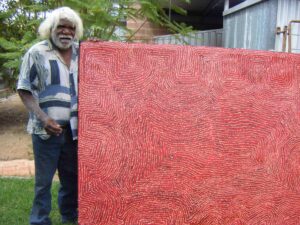
Aboriginal and Torres Strait Islander Cultural Warning: This page contains the name and image of a deceased First Nations artist. The artist’s photograph has been placed at the end of this biography in recognition that viewing images of deceased people may be culturally sensitive for some Aboriginal and Torres Strait Islander peoples. Please take care if you choose to continue scrolling.
Born circa 1932
Died 2021
Birth Region Kumilnga, Pollock Hills, WA
Community Kintore, NT
Language Pintupi
Few artists anywhere in the world carry the weight of cultural authority that Naata Nungurrayi brought to her practice. Her canvases hold more than formal beauty – they are living records of ceremonial knowledge, transmitted through paint by one of the last custodians of an unbroken desert tradition.
Nungurrayi was born around 1932 at Kumil, a rockhole site west of the Pollock Hills in the Gibson Desert of Western Australia. She spent the first decades of her life in the full practice of Pintupi nomadic existence – until a government welfare patrol reached her family around 1963 and brought them to Papunya. The transition was total: from desert country known in its every detail to a settlement she had never seen. That pre-contact life – its routes, its ceremonies, its waterholes and seasonal rhythms – remained the source and subject of everything she would paint.
In the years following contact she moved between communities, spending time at Docker River before making Kintore (Walungurru) her permanent home in the early 1980s. She joined the Kintore–Haasts Bluff collaborative canvas project in 1994 – one of a remarkable group of women artists whose emergence at Kintore would shift the entire character of the Western Desert painting movement. By 1996 she had begun painting formally for Papunya Tula Artists.
From the beginning, her work was marked by a productive tension: tightly ordered geometric fields played against freer, more gestural passages that drew on the women’s painting traditions taking shape at Kintore in the early 1990s. She gravitated naturally towards pale creamy ochres and warm earth colours, giving her canvases an unusual softness and inner light. Within a few years of starting she had established herself as both a leading painter and a senior cultural authority – her standing shaping the painting community around her.
She is the sister of celebrated painters George Hairbrush Tjungurrayi and Nancy Nungurrayi Ross, and the mother of Kenny Williams Tjampitjinpa. Together, these four artists represent one of the most distinguished artistic lineages in the history of Australian Indigenous art. Nungurrayi passed away in September 2021, leaving behind a body of work that occupies a permanent place in the canon of Australian art.
ARTISTIC STYLE
Nungurrayi’s visual practice occupies the point where two distinct Pintupi traditions converge – the ceremonial rigour of men’s painting and the more organic, body-centred mark-making that defines women’s work. Her surfaces are built up with a physical density of medium that gives canvases a tangible presence: richly worked, almost layered. She draws with authority – each line carrying the confidence that comes from knowing exactly what it represents – and her instinct for palette, working pale creamy ochres against deeper desert tones, produces a warmth and stillness that is entirely her own.
What strikes curators and collectors who engage closely with her work is the absence of any visible distance between the artist and the image. There is no apparent mediation, no stylistic hesitation – the country, the ceremony, and the canvas appear to resolve into a single thing. Described at the 2023 EMINENCE exhibition in New York as being ‘at the forefront of women’s painting’ and credited with reshaping the desert painting movement, Nungurrayi’s contribution to Australian art history is now fully recognised as one of the most significant of her generation.
2008 Ian Mclean: Publication: Naata Nungurrayi; Muni (Rita) Simpson; Spinifex Artists Group; Patrick Tjungurrayi. Perth, W.A.: Art Gallery of Western Australia
2008 Western Australian Art Award, Perth – Finalist
2008 25th NATSIAA, Darwin – Finalist
2007 TogArt Contemporary Art Award, Darwin Convention Centre, Darwin – Finalist
2007 24th NATSIAA, Darwin – Finalist
2006 23rd NATSIAA, Darwin – Finalist
2005 22nd NATSIAA, Darwin – Finalist
2004 Top 50 Collectable Artists, Australian Art Collector Magazine
2003 Australia Post International Stamp
2003 20th NATSIAA, Darwin – Finalist
2002 19th NATSIAA, Darwin – Finalist and Highly Commended
2001 18tth NATSIAA, Darwin – Finalist
2000 17th NATSIAA, Darwin – Finalist
Auction Results
Naata Nungurrayi is one of the most extensively traded senior Papunya Tula artists at auction, with over 166 works sold across all major Australian and international auction houses. Her secondary market is deep, liquid, and internationally active – with confirmed results at Sotheby’s Melbourne and New York, Deutscher and Hackett, Menzies, Bonhams, and Lawsons.
Selected Group Exhibitions:
2023 EMINENCE, New York. Described as ‘at the forefront of women’s painting’ and credited with revolutionising the desert painting movement.
2021 50 Years of Papunya Tula Artists, Kate Owen Gallery, Sydney
2021 Country in Mind, University of the Sunshine Coast, QLD
2021 Papunya Tula: 50 years 1971-2021, S.H. Erwin Gallery, Sydney
2020 Reflections on Emily and Papunya, High Line Nine Galleries, New York
2020 Pintupi Masters – Enduring Dreamings, Kate Owen Gallery, Sydney
2020 Papunya, D’Lan Contemporary, Melbourne
2019 Beyond Time, Australian Aboriginal Art, Booker Lowe Gallery, Houston, TX, USA
2019 Desert Painters of Australia, Larry Gagosian Gallery, New York, USA – from the Steve Martin & Anne Springfield Collections and Kluge-Ruhe Collection of the University of Virginia, USA
2019 10 panels from the Iconography series, Naata Nungurrayi, Kambri Cultural Centre, Drill Hall Gallery, Australian National University, Canberra
2019 International Women’s Day, Kate Owen Gallery, Sydney
2019 Defining Tradition: the first wave & its disciples, Kate Owen Gallery, Sydney
2019 Spring Collection: Exhibition to celebrate our beautiful Spring Collection, Brenda Colahan Fine Art, Sydney
2019 Significant, D’Lan Contemporary, Melbourne
2018 20/20 Vision: 20 Years 20 Women, Brenda Colahan Fine Art, Sydney
2018 Into Abstraction: Exploring the Diversity of Abstraction and its Affiliations from the 1960’s until the Present, Brenda Colahan Fine Art, Sydney
2018 Significant, D’Lan Contemporary, Melbourne
2017 Gems of the Stockroom, Kate Owen Gallery, Sydney
2016 Important Australian Indigenous Art , D’Lan Contemporary, Melbourne
2012 Unique Perspectives: Papunya Tula Artists and the Alice Springs Community, Araluen Arts Centre, Alice Springs
2012 unDISCLOSED, 2nd National Indigenous Art Triennial, National Gallery of Australia, Canberra
2012 Classic Works from Papunya Tula Artists, Utopia Art, Sydney
2010 Desert Country, Art Gallery of South Australia, Adelaide
2011 Papunya Tula Women’s Art, Maitland Regional Gallery, Maitland, NSW
2011 Freemantle Arts Centre Print Award, Freemantle, WA
2011 40 Years of Papunya Tula Art, Utopia Art, Sydney
2010 Wilkinkarralakutu – Journeys to Lake Mackay, Cross Cultural Art Exchange, Darwin
2010 The Desert Mob Art Show, Araluen Centre, Alice Springs
2010 Significant Women Artists from the Western Desert, Scott Livesey Galleries, Melbourne
2010 Papunya Tula Artists Now, Utopia Art, Sydney
2010 Ngurra Kutju Ngurrara – Belonging to One Country, Red Dot Gallery, Singapore
2010 Desert Country, Art Gallery of South Australia, Adelaide
2010 Darwin International Art Fair, Darwin Convention Centre, Darwin
2010 Aboriginal Art 2010, Scott Livesey Galleries, Melbourne
2009 Western Australian Indigenous Art Awards, Art Gallery of Western Australia, Perth
2009 Tjukurrpa Palulukutu, Kutjupawana Palyantjanya Sames Stories, A New Way, Papunya Tula Artists, Alice Springs
2009 Pintupi 2009, Tony Bond Aboriginal Art Dealer, Adelaide
2009 Papunya Tula Artists, Gallery Gabrielle Pizzi, Melbourne
2009 Papunya 2009, Senior Pintupi Artists, Gallery Gabrielle Pizzi, Melbourne
2009 Ngnampatju Kanpatja Winki, Nganampatju Yara Winki All Our Paintings, All Our Stories, Papunya Tula Artists, Alice Springs
2009 Nganana Tjungurrayi Tjukurrpa Nintintjkitja: We are Sharing our Dreaming, East Galleries, New York, USA
2009 Desert Mob 2009, Araluen Art Centre, Alice Springs
2009 Darwin Aboriginal Art Fair, Convention Centre, Darwin
2009 20 Years of Papunya Tula Artists, Utopia Art, Sydney
2008 The Other Thing – A Survey Show, Charles Darwin University Art Collection, Darwin
2008 Pintupi Art 2008, Tony Bond Aboriginal Art Dealer, Adelaide
2008 Papunya Tula Artists 2008, Gallery Gabrielle Pizzi, Melbourne
2008 Ngurra Yurru Kulintjaku Always Remembering Country, Cross Cultural Art Exchange (CCAE) at Harriet Place, Darwin
2008 New Paintings from the Papunya Tula Artists, Chapman Gallery, Canberra
2008 Marrangku Yara Polyantjaku Ngurrangka Making Strong Paintings at Home, Papunya Tula Artists, Alice Springs
2008 Desert Prophets, Indigenart, Perth
2008 Darwin Aboriginal Art Fair, Darwin
2008 Aboriginal Art 2008, Scott Livesey Galleries, Melbourne
2008 25th Telstra National Aboriginal & Torres Strait Islander Art Award, Darwin
2007 TogArt Contemporary Art Award, Parliament House, Darwin
2007 Pintupi Mixed Exhibition, Papunya
Tula Artists, Alice Springs
2007 Pintupi Art 2007, Tony Bond Aboriginal Art Dealer, Adelaide
2007 Papunya Tula Artists – Recent Paintings 2007, Cross Cultural Art Exchange (CCAE) at Harriet Place, Darwin
2007 24th Telstra National Aboriginal & Torres Strait Islander Art Award, Darwin
2006 Yawulyurru kapalilu palyara nintilpayu, Papunya Tula Artists, Alice Springs
2006 PTA, Utopia Art, Sydney
2006 Pintupi, Hamiltons Gallery, London, UK
2006 Pintupi Dreamtime, Red Dot Gallery, Singapore
2006 Pintupi Art 2006, Tony Bond Aboriginal Art Dealer, Adelaide
2006 Papunya Tula Artists 2006, Gallery Gabrielle Pizzi, Melbourne
2006 Papunya Tula Artists – Recent Paintings 2006, Cross Cultural Art Exchange (CCAE) at Harriet Place, Darwin
2006 Aboriginal Art 2006, Scott Livesey Galleries, Melbourne
2006 A Particular Collection, Utopia Art, Sydney
2006 23rd Telstra National Aboriginal & Torres Strait Islander Art Award, Darwin
2005 The Desert Mob Art Show, Araluen Art Centre, Alice Springs
2005 Strong and Stately, Red Dot Gallery, Singapore
2005 Pintupi Show, Papunya Tula Artists, Alice Springs
2005 Pintupi Art 2005, Tony Bond Aboriginal Art Dealer, Adelaide
2005 Papunya Tula Artists, Gallery Gabrielle Pizzi, Melbourne
2005 Papunya Tula Artists New Work for a New Space, Utopia Art, Sydney
2005 New Works from the Western Desert, Indigenart, Perth
2005 New Ideas, Utopia Art, Sydney
2005 Aboriginal Art 2005, Scott Livesey Art Dealer, Melbourne
2005 22nd Telstra National Aboriginal & Torres Strait Islander Art Award, Darwin
2004 Pintupi Artists, Papunya Tula Artists, Alice Springs
2004 Pintupi Art 2004, Tony Bond Aboriginal Art Dealer, Adelaide
2004 Papunya Tula Artists 2004, Gallery Gabrielle Pizzi, Melbourne
2004 Melbourne Art Fair, Royal Exhibition Building, Melbourne
2004 Ma Yungu Pass it on, Framed Gallery, Darwin
2004 Depth of Field Anamorphosis: Artists explore Absolute Matte, a new paint from Chroma Australia, Utopia Art, Sydney
2004 All About Papunya, Chapman Gallery, Canberra
2004 Aboriginal Art 2004, Scott Livesey Art Dealer, Melbourne
2003 Recent Paintings by the Women Artists of Kintore and Kiwikurra, Gallery Gabrielle Pizzi, Melbourne
2003 Pintupi Artists, Papunya Tula Artists, Alice Springs
2003 Pintupi Art from the Western Desert, Indigenart, Perth
2003 Pintupi Art 2003, Tony Bond Aboriginal Art Dealer, Adelaide
2003 Papunya Tula Selected Paintings, William Mora Galleries, Melbourne
2003 Masterpieces from the Western Desert, Gavin Graham Gallery, London, UK
2003 Aboriginal Art 2003, Scott Livesey Art Dealer, Melbourne
2003 A Way Through, The Sue and Ian Bernadt Collection, Aboriginal Paintings by Women Artists, Central TAFE Art Gallery, Northbridge, Perth
2002 Saluting Papunya, Chapman Gallery, Canberra
2002 Pintupi Mens and Womens Stories, Indigenart, Perth
2002 Pintupi Artists, Papunya Tula Artists, Alice Springs
2002 Paintings from our Country, Tony Bond, Adelaide
2002 Next Generation – Aboriginal Art 2002, Art House Gallery, Sydney
2002 Art Born of the Western Desert, Framed Gallery, Darwin
2002 19th Telstra National Aboriginal & Torres Strait Islander Art Award, Darwin
2001 Spirituality and Australian Aboriginal Art, Comunidad the Madrid Touring Exhibition, Spain
2001 Pintupi Exhibition, Papunya Tula Artists, Alice Springs
2001 Papunya Tula 30th Anniversary Exhibition, Canberra
2001 Palm Beach Art Fair, Palm Beach, Florida, USA
2001 Museum, Utopia Art, Sydney
2001 Kintore and Kiwikurra, Gallery Gabrielle Pizzi
2001 Art of the Pintupi, Tony Bond Art Dealer, Adelaide
2001 Art House Gallery, Sydney
2001 Aboriginal Art 2001, Scott Livesey Art Dealer, Melbourne
2001 18th Telstra National Aboriginal & Torres Strait Islander Art Award, Darwin
2000 Pintupi Women, Papunya Tula Artists, Alice Springs
2000 Papunya Tula – Genesis and Genius, Art Gallery of New South Wales, Sydney
2000 Melbourne Art Fair, Melbourne
2000 Lines, Fireworks Gallery, Brisbane
2000 Encore, Utopia Art, Sydney
2000 Dream Space, Original and Authentic Aboriginal Art, Melbourne
2000 Aboriginal Art 2000, Scott Livesey Art Dealer, Melbourne
2000 17th Telstra National Aboriginal & Torres Strait Islander Art Award, Darwin
1999 Utopia Art, Sydney
1999 Twenty-Five Years and Beyond, Flinders University of South Australia, Bedford Park, Adelaide
1999 New Horizons, Gallery Gabrielle Pizzi, Melbourne
1999 Desert Mob Art Show, Araluen Art Centre, Alice Springs
1997 The Desert Mob Art Show, Araluen Art Centre, Alice Springs
1995 Minyma Tjukurrpa
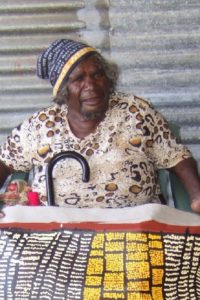
Aboriginal and Torres Strait Islander Cultural Warning: This page contains the name and image of a deceased First Nations artist. The artist’s photograph has been placed at the end of this biography in recognition that viewing images of deceased people may be culturally sensitive for some Aboriginal and Torres Strait Islander peoples. Please take care if you choose to continue scrolling.
Born circa 1925
Died 2011
Region Mina Mina
Language Warlpiri
Paddy Lewis Japanangka was born around 1925–1928 in the bush country around Yuendumu and Nyirripi, living as a nomadic hunter-gatherer with his extended Warlpiri family. Travelling vast distances across the desert, he was taught the traditional ways of his country from an early age – its songlines, ceremonies, and the sacred geography that would define his life’s work as both a senior law man and an artist.
In 1957, Paddy was relocated from his tribal lands near Mina Mina – one of many Warlpiri people removed during the government settlement era. The following year, he was photographed alongside Pegleg Tjampitjinpa as young warriors leaving the desert. That image was published in the 1962 edition of National Geographic magazine in an article by anthropologist Donald Thomson – a document of extraordinary historical significance that places Paddy at the living intersection of two worlds.
He spent his life in Nyirripi, 460 km northwest of Alice Springs, where he held deep authority as a custodian of Warlpiri law and ceremony. Like many Indigenous Elders of his generation, he experienced significant vision impairment for much of his adult life. Following a government-sponsored operation that restored his sight, he immediately asked for a painting stick – and began creating the most important body of work of his lifetime.
In 2008, Harvey Galleries in Sydney curated Paddy Lewis Japanangka’s first solo show of important lifetime works. This is significant when considering that an academic paper was published on this exhibition, headed by highly acclaimed author, Susan McCulloch.
Paddy has been included in a number of international shows and in many important private collections. He was a part of the Warlukurlangu project, which resulted in the Yuendumu doors collections that is now an international touring exhibition.
EXHIBITIONS & RECOGNITION
Solo Exhibitions
2008 Trevor Victor Harvey Gallery, Sydney. Accompanied by an academic paper authored by eminent art historian Susan McCulloch, published in association with the show.
International Group Exhibitions
2010 Pro Community: ARTKELCH — Contemporary Aboriginal Art, Freiburg, Germany.
2010 Hunter Dreams Of, African Muse Gallery, Paris, France.
2009 Last Dreams, African Muse Gallery, Paris, France.
Ongoing Multiple international group exhibitions throughout his painting career (1999–2011).
Historic Projects
Warlukurlangu / Yuendumu Doors Project – International touring exhibition. A landmark collaborative Aboriginal art project in which Paddy participated, now held in the collection of the South Australian Museum, Adelaide.
ARTISTIC LEGACY
Paddy Lewis Japanangka is the patriarch of one of the most significant multi-generational custodial art lineages in Warlpiri culture. His daughters Dorothy Napangardi Lewis and Margaret Lewis Napangardi both became accomplished painters, carrying the Mina Mina Jukurrpa tradition he established forward into international prominence.
Paddy also has grandchildren and great-grandchildren continuing to paint the Mina Mina country, cementing one of the most significant multi-generational custodial art lineages in Warlpiri culture.
AUCTION RESULTS
Paddy Lewis’s market profile is defined by rarity, scholarly provenance, and a powerful lineage argument. His formal painting career spanned just twelve years (1999–2011) and his works entered the market almost exclusively through institutional channels – Warlukurlangu Artists, Yanda Artists and Harvey Galleries – ensuring strong documentation for every piece.
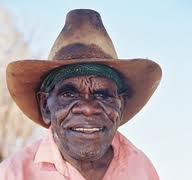
Aboriginal and Torres Strait Islander Cultural Warning: This page contains the name and image of a deceased First Nations artist. The artist’s photograph has been placed at the end of this biography in recognition that viewing images of deceased people may be culturally sensitive for some Aboriginal and Torres Strait Islander peoples. Please take care if you choose to continue scrolling.
Born circa 1935
Died 2013
Region Yamari Western Desert
Language Pintupi
“Nyurapayia Nampitjinpa grabbed me tightly by the arm and pulled me closer to her, for an elderly woman her upper body strength is extraordinary. I was troubled by the expression on her face, she raised her eyebrow and one fierce bright eye stared up at me. As I turned to escape she pulled me even closer, began to grin and whispered softly into my ear, “Mrs Bennett, number one” – Trevor Harvey.
Nyurapayia Nampitjinpa was born at Yumarra, north of Docker River, in the Western Desert around 1935. She grew up with her immediate family – on Pitjantjatjara lands in the country surrounding Docker River. She was schooled in traditional culture, and it wasn’t until her early teens that she made first contact with the wider world.
She was the wife of the celebrated Papunya Tula artist John John Bennett Tjapangati – together one of the most significant artistic partnerships in Western Desert painting. Like her husband, Nyurapayia is a Ngangkari (traditional healer), a role that situates her painting practice within a much deeper authority: when she was young, she began to learn the song lines so important to the beliefs and survival of her people, and that knowledge permeates every work she has made.
She began her artistic career in the mid-1990s, painting her mother’s Dreaming site – Tjalilli rockhole near Tjukurla — as well as the sites of Pukara and Mungkara. Her most beloved subject, and the one that defines her late-career masterworks, is Punkilpirri (also known as Bungabiddy) – the large permanent water site northwest of Docker River, in the Walter James Range.
Her striking late paintings favour a stripped-down palette: strong black under-painted contour landscape lines contrast with deep umbers and sandy off-white over-painting of concentric circles. This formal economy – far from minimalism – concentrates ancestral energy into each composition, giving her works an almost architectural authority that distinguished her from contemporaries working in more decorative registers.
Today, her works are held in major global institutions including the National Gallery of Victoria, the Art Gallery of New South Wales, and significant private collections across Europe and North America. She is the subject of a dedicated scholarly monograph – a distinction accorded to very few Western Desert artists – and remains one of the most rigorously collected painters on the secondary market.
RECOGNITION & AWARDS
Nyurapayia Nampitjinpa accumulated a series of critical and scholarly distinctions that placed her among the most celebrated Western Desert artists of her generation, including one of the few dedicated monographs ever accorded to a Western Desert woman painter.
GROUP EXHIBITIONS
2006 Yawulyurru kapalilu palyara nintilpayi, Papunya Tula Artists, Alice Springs, NT
2006 Paintings By Papunya Tula Artists, Suzanne O’Connell Gallery, Brisbane, QLD
2006 A Particular Collection, Utopia Art Sydney, NSW
2006 Pintubi Dreaming, Red Dot Gallery, Singapore
2006 Land Marks, National Gallery of Victoria, Melbourne, Vic
2006 Across The Board, Utopia Art Sydney, NSW
2004 The Inner and the Outer, Stadtgalerie Bamberg, Villa Dessauer, Bamberg, Germany
2004 All About The Papunya, Chapman Gallery, Canberra, ACT
2004 Woolloongabba Art Gallery, Brisbane, QLD
2004 Works From Kintore and Kiwirrkura, Alison Kelly Gallery, Melbourne, Vic
2004 Kuniya Pilkati, Gallery Gabrielle Pizzi, Melbourne, Vic
2003 Christmas Gift Exhibition, Alcaston Gallery, Melbourne,
2003 Pintupi Art From The Western Desert, Indigenart, Subiaco,
2003 Aboriginal Art 2003, Scott Livesey Art Dealer, Melbourne, Vic
2002 Next Generation – Aboriginal Art 2002, Art House Gallery, Sydney, NSW
2002 Paintings From Our country, Tony Bond Aboriginal Art Dealer, Adelaide, SA
2002 Twenty Five Years and Beyond – Papunya Tula Painting, Academy of the Arts, University of Tasmania, Tasmania
2002 Twenty Five Years and Beyond – Papunya Tula Painting, Brisbane City Gallery, QLD
2002 Scott Livesey Art Dealer, Melbourne, Vic
2002 Pintupi Mens’ and Womens’ Stories, Indigenart, Subiaco, WA
2002 Pintupi Artists, Papunya Tula Artists, Alice Springs, NT
2001 Palm Beach Art Fair, Palm Beach, Florida, USA
2001 Art House Gallery, Sydney, NSW
2001 Papunya Tula 2001, William Mora Galleries, Melbourne,
2001 Art of the Pintupi, Tony Bond Aboriginal Art Dealer, Adelaide, SA
2001 Papunya Tula Women, William Mora Galleries, Melbourne,
2001 Twenty Five Years and Beyond Papunya Tula Painting, The Araluen Centre, Alice Springs
2001 Indigenart, Subiaco, WA
2001 Pintupi Exhibition, Papunya Tula Artists, Alice Springs, NT
2001 Pintupi Women From Kintore, Fireworks Gallery, Brisbane,
2001 Size Doesn’t Matter, William Mora Galleries, Melbourne,
2000 Utopia Art, Sydney, NSW
2000 Aboriginal Art, Aboriginal Art Gallerie Bahr, Speyer, Germany
2000 Aboriginal Art 2000, Scott Livesey Gallery, Armadale, Vic
2000 Papunya Tula – Genesis and Genius, Art Gallery of New South Wales, Sydney
2000 17th National Aboriginal and Torres Strait Islander Art Award, Darwin, NT
2000 Framed Gallery, Darwin, NT
2000 Pintupi Women – Papunya Tula Artists, Alice Springs, NT
AUCTION RESULTS
Secondary market demand for Nyurapayia Nampitjinpa’s work has been consistent and upward-trending. Her confirmed results demonstrate a price floor well above the Western Desert women’s average, anchored by the Punkilpirri series that critics and collectors identify as her defining body of work.
COLLECTIONS
Aboriginal Art Museum, The Netherlands
Art Bank, Sydney
Art Gallery of NSW, Sydney
Art Gallery of South Australia, Adelaide
Art Gallery of Western Australia, Perth
Donald Kahn Collection, USA
Homes à Court Collection, Perth
Kelton Foundation, Santa Monica, USA
Museum and Art Gallery of the Northern Territory, Darwin
National Gallery of Victoria, Melbourne
National Museum of Australia, Canberra
Queensland Art Gallery, Brisbane
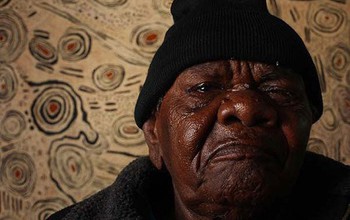
Aboriginal and Torres Strait Islander Cultural Warning: This page contains the name and image of a deceased First Nations artist. The artist’s photograph has been placed at the end of this biography in recognition that viewing images of deceased people may be culturally sensitive for some Aboriginal and Torres Strait Islander peoples. Please take care if you choose to continue scrolling.
Born circa 1920
Died 2006
Region Western Desert
Language Pintupi
Pegleg Tjampitjinpa was born around 1920 near Wilkinkarra (Lake Mackay) in the Western Desert of Western Australia, on the country of his Pintupi ancestors. He lived a fully traditional life in the Gibson Desert, remaining beyond the reach of European contact until 1957, when a Northern Territory Welfare Branch patrol encountered his family at a rockhole south of Kiwirrkurra. His family, which included more than a dozen children across multiple wives, was among the last groups to make contact with the outside world in this remote region.
His distinctive name derives from a defining event in his early life: an infected spear wound sustained during a tribal conflict led, after four months of suffering, to the amputation of his leg from the knee down. Thereafter he moved with the aid of a long pole, a characteristic that those who knew him remembered vividly. He is documented by name in two significant historical accounts of the Western Desert – W.J. Peasley’s Bindibu Country (1975) and Douglas Lockwood’s The Lizard Eaters (1964). In 1962, he was photographed alongside fellow Pintupi man Paddy Japanangka Lewis as warriors leaving the desert, in an image published in National Geographic by anthropologist Donald Thomson – one of the defining photographs of the last contact era.
Following contact, his family moved to Yuendumu in 1964, and he eventually settled at Mount Liebig (Watiyawanu) in the Northern Territory. In 1984 he was appointed trustee of the Wilkinkarra Land Trust, an honour that acknowledged his status as a senior custodian of Wilkinkarra country – the vast salt lake sacred to Pintupi law. He was a man of considerable authority and quiet strength, deeply respected as a keeper of ceremony and Dreaming knowledge.
Pegleg began painting during a visit to his close lifelong friend and fellow Pintupi man Pinta Pinta Tjapanangka at Walungurru (Kintore). Following Pinta Pinta’s death, and as his own eyesight deteriorated, he ceased painting for a period. A successful eye operation in the late 1990s restored his vision and he returned to the canvas with renewed purpose, continuing to paint until his passing in 2006.
ARTISTIC PRACTICE
Pegleg Tjampitjinpa’s paintings are rooted in the Tingari cycle – the great Men’s Dreaming narratives of the Western Desert that describe the journeys of ancestral Tingari beings as they moved across vast tracts of country, gathering at sacred sites to perform initiation ceremonies. These journeys shaped the physical landscape: its rockholes, sandhills, sacred mountains and water soakages. Wilkinkarra (Lake Mackay), his ancestral country, is a recurring presence in his work, rendered through the abstract visual language of Pintupi ceremony.
Pegleg came to painting later in life and brought with him the perspective of an elder who had lived on country in the traditional way well into adulthood. There is an unmediated quality to his canvases – a sense that the Dreaming narratives are not being interpreted but simply declared, with the economy and confidence of deep knowledge.
HISTORICAL SIGNIFICANCE
Pegleg Tjampitjinpa belongs to a small and diminishing group of artists who bridge two worlds entirely: the pre-contact desert life of the Pintupi people and the contemporary Indigenous art movement that emerged from Papunya in the early 1970s. He is named in two of the most important historical accounts of the Gibson Desert – W.J. Peasley’s Bindibu Country (1975) and Douglas Lockwood’s The Lizard Eaters (1964) – making him a documented figure in Australian cultural history long before he became a painter.
The 1962 National Geographic photograph by anthropologist Donald Thomson – depicting Pegleg and Paddy Japanangka Lewis as warriors stepping out of the desert for the first time – stands as one of the defining images of the last contact era. It is a rare document: a named individual, captured at the precise historical moment of transition between two worlds, who later became an artist whose paintings map those same ancestral territories.
As trustee of the Wilkinkarra Land Trust from 1984, he was a recognised custodian of one of the Pintupi people’s most sacred sites. His paintings are therefore not merely artworks: they are acts of cultural stewardship, carrying the Tingari law forward in visual form.
MARKET OVERVIEW
Pegleg Tjampitjinpa’s work is valued for its authenticity, historical grounding, and direct connection to the formative Papunya Tula tradition. His inclusion in Papunya Tula: Genesis and Genius at the Art Gallery of New South Wales in 2000 – one of the most important surveys of the movement ever mounted – positions him firmly within the historical canon. As one of the last senior Pintupi men to have lived a fully traditional life before contact, and as a documented figure across two published books and a National Geographic article, his works carry a depth of provenance rarely found in contemporary Indigenous art.
With his passing in 2006, the supply of his work is fixed and finite. Each piece that comes to market is both a cultural document and a collectible of increasing rarity.
SELECTED EXHIBITION HISTORY
COLLECTIONS
Works by Pegleg Tjampitjinpa are held in major public and private collections throughout Australia and internationally. His standing as a Wilkinkarra Land Trust trustee, his documented historical presence in the Western Desert record, and his inclusion in the seminal 2000 AGNSW survey underpin sustained institutional and collector interest in his work.
Born circa 1958
Region Kiwirrkurra, Western Australia
Language Pintupi
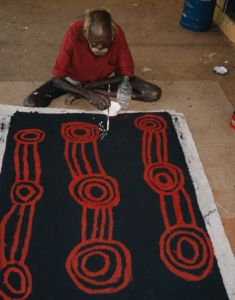
Warlimpirrnga Tjapaltjarri was born around 1958 at Tjuurlnga in the Angus Hills east of Kiwirrkurra, in the Gibson Desert of Western Australia. He is the son of Waku Tjungurrayi and Papalya Nangala, and grew up as part of a family group who maintained a fully traditional nomadic hunter-gatherer life – one of the last such groups in Australia. His father died during his childhood; he married Yalti Napangati around 1980 and has four children.
On 19 October 1984, when Warlimpirrnga was approximately 26 years old, he and his family group of nine – today known as the “Pintupi Nine” or “The Last Nomads” – emerged from the desert near Mt Webb after encountering fellow Pintupi man Pinta Pinta Tjapanangka. Their arrival at Kiwirrkurra made international headlines. It was one of the last documented instances of an uncontacted Aboriginal family group entering modern Australian society. His half-brother Piyirti later disappeared back into the desert; Warlimpirrnga claims to be the only person who knows his location.
The nine included his brothers Walala Tjapaltjarri and Thomas Tjapaltjarri, his sister Yukultji Napangati, and other family members – six of the nine would eventually become artists. Warlimpirrnga subsequently encouraged his siblings to paint, and today the four of them represent one of the most remarkable artist families in the world: all working from the same living Dreaming knowledge, all exhibited and collected internationally.
Within three years of first contact, Warlimpirrnga had begun painting with Papunya Tula Artists at Kiwirrkurra and mounted his debut exhibition in Melbourne. Today he is represented by Gagosian – one of the world’s most prestigious galleries – and his work has been acquired by major institutions across four continents.
Artistic Style
Warlimpirrnga Tjapaltjarri’s technique is one of extraordinary precision and patience: thousands upon thousands of individually placed dots, built into undulating parallel lines, lozenge forms, and meandering circuits that create surfaces of remarkable optical intensity. The dot technique derives directly from Pintupi ceremonial body decoration and sand drawing practices – one of the most ancient visual traditions on earth – transferred to canvas with the full authority of someone who learned that tradition from the inside, not as cultural inheritance but as lived practice.
The visual result is unmistakable: dense, shimmering all-over fields that vibrate with the heat and energy of the desert, their surfaces oscillating between abstract geometry and encoded geography. His palette – ochres, whites, dark reds, greys, blacks – is anchored in the colours of the Western Desert itself. These are not optical illusions. They are maps of country, songs made visible, law encoded in paint.
Critical Reception
“An outstanding Australian artist whose works are marvels – lambent circuits of white dots whose irregular contours seem to tremble and oscillate.”
— The New Yorker, 2015
“His tight parallel lines of thousands of dots oscillate like the Op Art of Bridget Riley – while transcribing ancestral narratives of Pintupi country.”
— The New York Times, 2015
HISTORICAL SIGNIFICANCE – THE PINTUPI NINE
What distinguishes Warlimpirrnga Tjapaltjarri from virtually every other artist alive is the nature of his biography. He did not inherit Pintupi law through ceremony and instruction in a settled community. He lived it – in the desert, without contact with the outside world – until he was in his mid-twenties. The knowledge encoded in his paintings is not recalled tradition. It is lived experience of country, ceremony, and law conducted entirely outside the reach of modernity.
Within three years of his first contact with European society, he had translated that knowledge to paint and exhibited it in Melbourne. Within thirty years, that same painting was acquired by Sotheby’s London, the Musée du Quai Branly in Paris, Harvard Art Museums, and Gagosian. There is no equivalent story in the history of contemporary art.
In 2019, the copyright of his 1987 work Tingari Dreaming was violated when it was reproduced as a set prop for the Netflix series After Life without permission. Following public exposure, the production company paid compensation – a moment that highlighted both his status as a recognised cultural custodian and the global visibility his work now commands.
Auction Record
Warlimpirrnga Tjapaltjarri holds one of the strongest auction records of any living Western Desert artist. With more than 304 works offered at auction internationally and over 100 confirmed sales, his secondary market is active across Sotheby’s London, Sotheby’s New York, and other major international houses.
SELECTED EXHIBITIONS & RECOGNITION
2025 Expo Chicago, Chicago, USA
2023–2024 Art Miami, Miami, USA (SmithDavidson Gallery)
2020 Desert Painters of Australia: Two Generations, Gagosian, Hong Kong
2019 Desert Painters of Australia Part II, Gagosian, Beverly Hills
2019 Desert Painters of Australia, Gagosian, New York
2019 Mapa Wiya, Menil Collection, Houston, USA
2017 Marawa, Piermarq, Sydney (solo exhibition)
2016 Pérez Art Museum Miami, USA
2016 No Boundaries: Aboriginal Australian Contemporary Abstract Painting (touring exhibition)
2015 Maparntjarra, Salon 94, New York (US debut solo exhibition)
2012 dOCUMENTA (13), Kassel, Germany — one of the most significant international contemporary art exhibitions
2009 Joint exhibition with Patrick Tjungurrayi, Scott Livesey Galleries, Melbourne
2000–2001 Papunya Tula: Genesis and Genius, Art Gallery of New South Wales, Sydney
1989 Mythscapes, group exhibition, via Papunya Tula Artists
1988 Debut exhibition, Gallery Gabrielle Pizzi, Melbourne — all 11 works acquired by National Gallery of Victoria (donated by Ron and Nellie Castan)
Public Collections
National Gallery of Victoria, Melbourne (eleven works from 1988 debut)
Art Gallery of New South Wales, Sydney
National Gallery of Australia, Canberra
Harvard Art Museums, Cambridge, USA
Musée du Quai Branly, Paris, France
Kluge-Ruhe Aboriginal Art Collection, University of Virginia, USA
Toledo Museum of Art, Ohio, USA
University of Canberra Art Collection
Kelton Foundation, USA