UPCOMING
4 to 6 November 2026
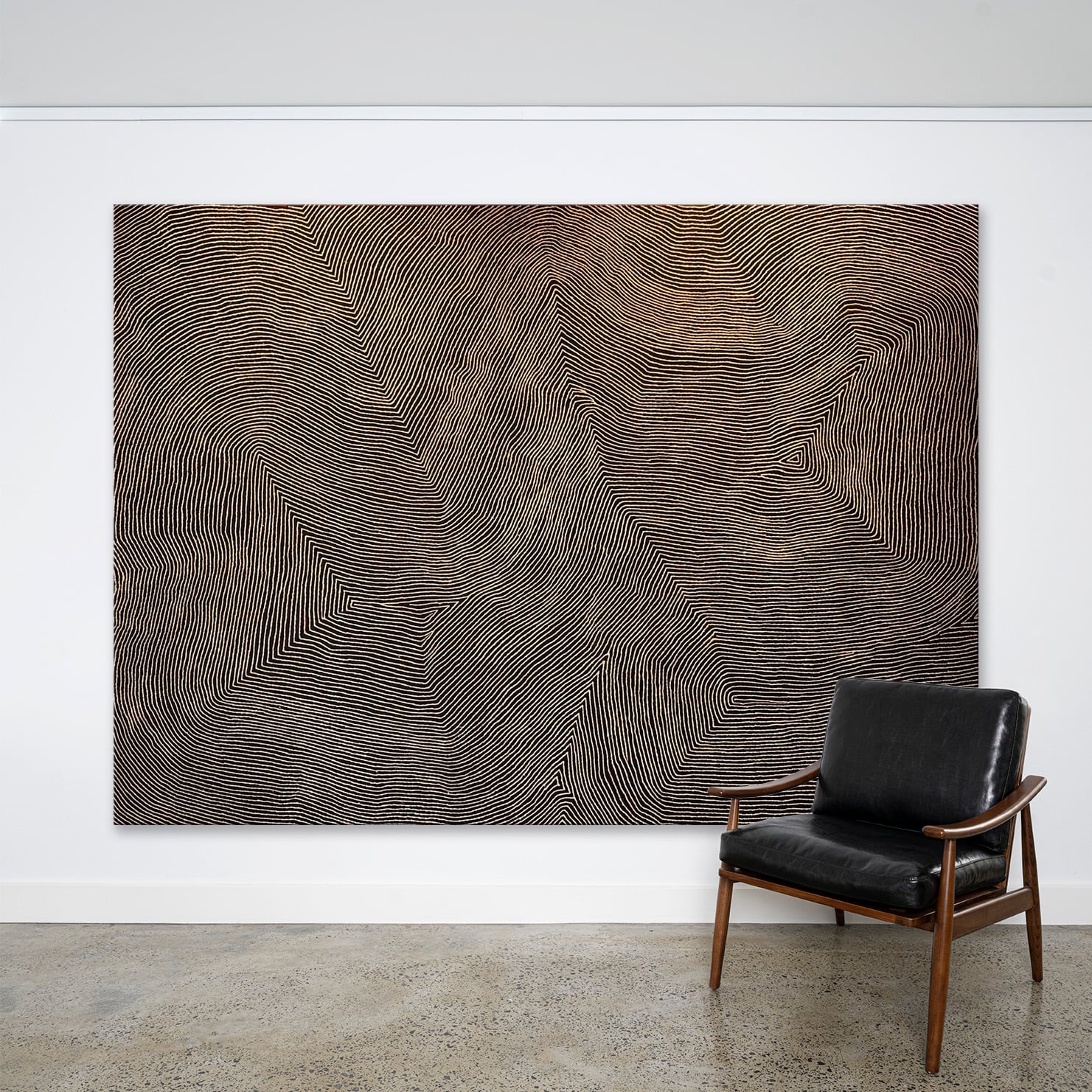
Acrylic on Linen
183 x 244 cm
A$150,000 Buy NowAcrylic on Linen
90 x 120 cm
Sold SoldHaven't found what you're looking for?
Contact a consultant about other ways to acquire an artist's artwork.
Acrylic on Linen
183 x 243 cm
A$44,000 Buy Now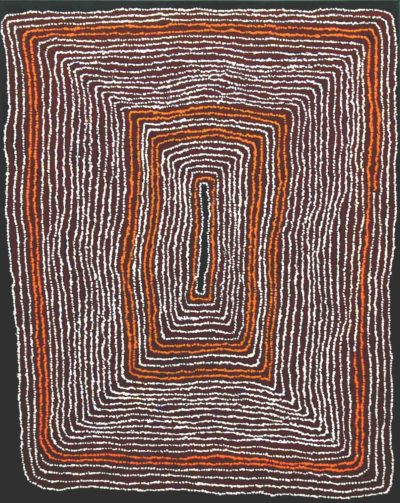
Acrylic on Linen
122 x 91 cm
A$12,000 Buy Now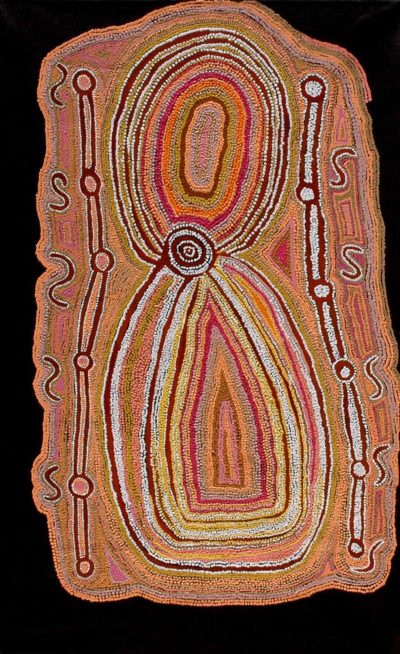
Acrylic on Linen
152 x 91 cm
A$18,000 Buy Now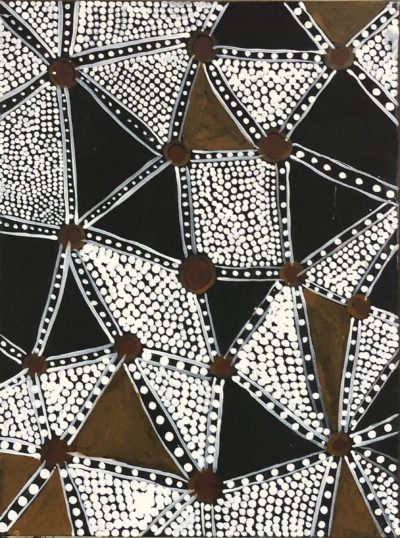
Acrylic on Canvas
83 x 63 cm Framed
A$7,500 Buy NowBorn circa 1958
Region Kiwirrkurra, Western Australia
Language Pintupi
Warlimpirrnga Tjapaltjarri was born around 1958 at Tjuurlnga in the Angus Hills east of Kiwirrkurra, in the Gibson Desert of Western Australia. He is the son of Waku Tjungurrayi and Papalya Nangala, and grew up as part of a family group who maintained a fully traditional nomadic hunter-gatherer life – one of the last such groups in Australia. His father died during his childhood; he married Yalti Napangati around 1980 and has four children.
On 19 October 1984, when Warlimpirrnga was approximately 26 years old, he and his family group of nine – today known as the “Pintupi Nine” or “The Last Nomads” – emerged from the desert near Mt Webb after encountering fellow Pintupi man Pinta Pinta Tjapanangka. Their arrival at Kiwirrkurra made international headlines. It was one of the last documented instances of an uncontacted Aboriginal family group entering modern Australian society. His half-brother Piyirti later disappeared back into the desert; Warlimpirrnga claims to be the only person who knows his location.
The nine included his brothers Walala Tjapaltjarri and Thomas Tjapaltjarri, his sister Yukultji Napangati, and other family members – six of the nine would eventually become artists. Warlimpirrnga subsequently encouraged his siblings to paint, and today the four of them represent one of the most remarkable artist families in the world: all working from the same living Dreaming knowledge, all exhibited and collected internationally.
Within three years of first contact, Warlimpirrnga had begun painting with Papunya Tula Artists at Kiwirrkurra and mounted his debut exhibition in Melbourne. Today he is represented by Gagosian – one of the world’s most prestigious galleries – and his work has been acquired by major institutions across four continents.
Artistic Style
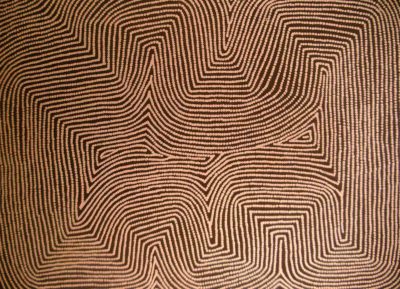
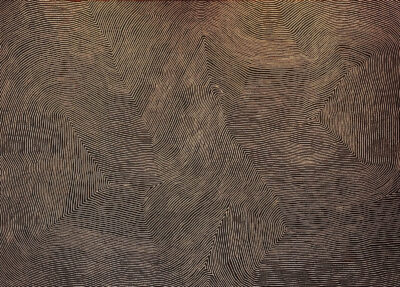
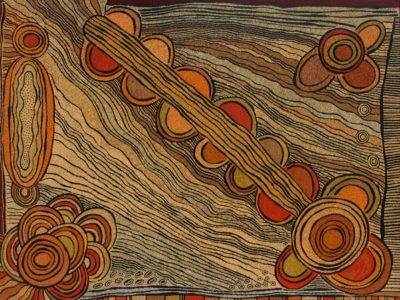
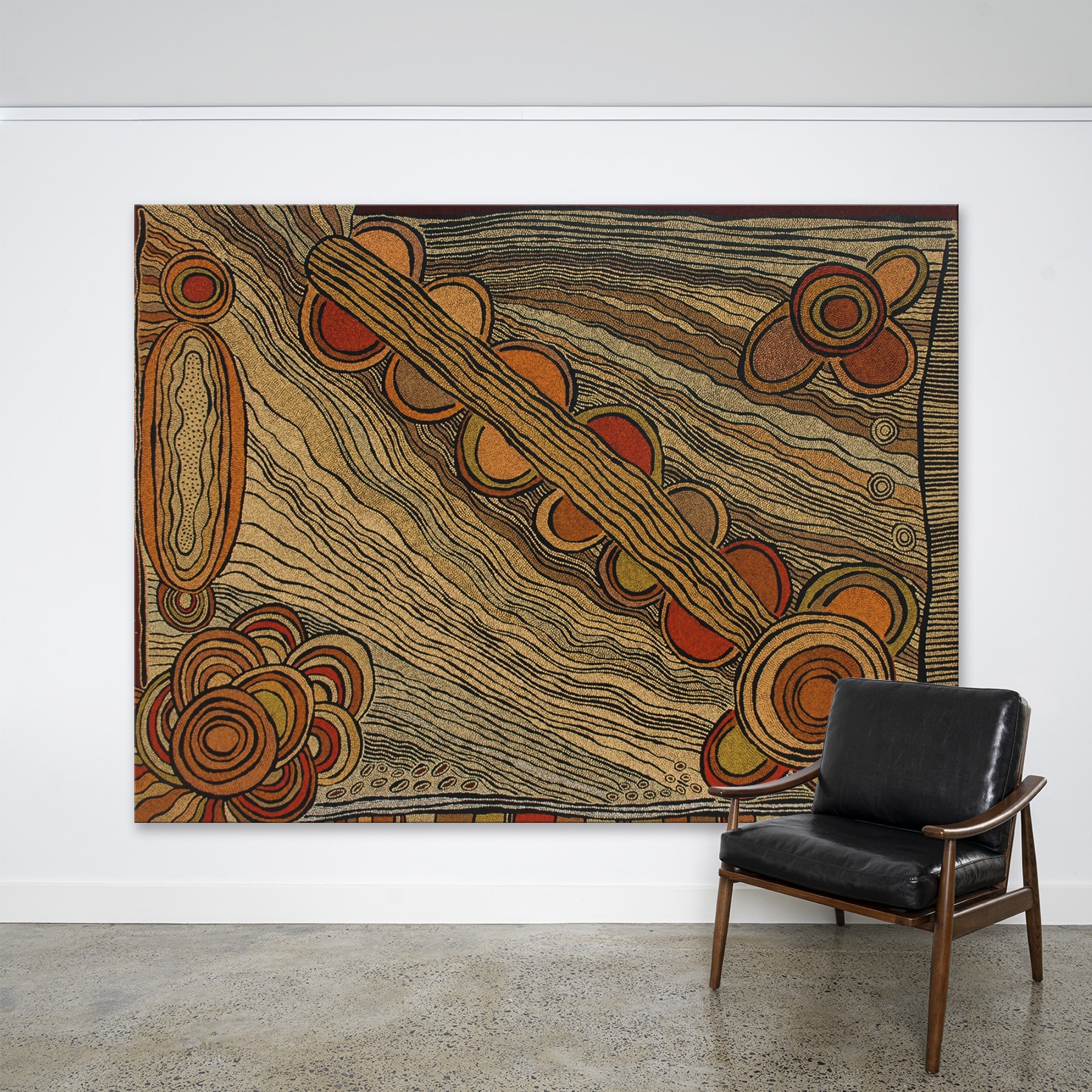
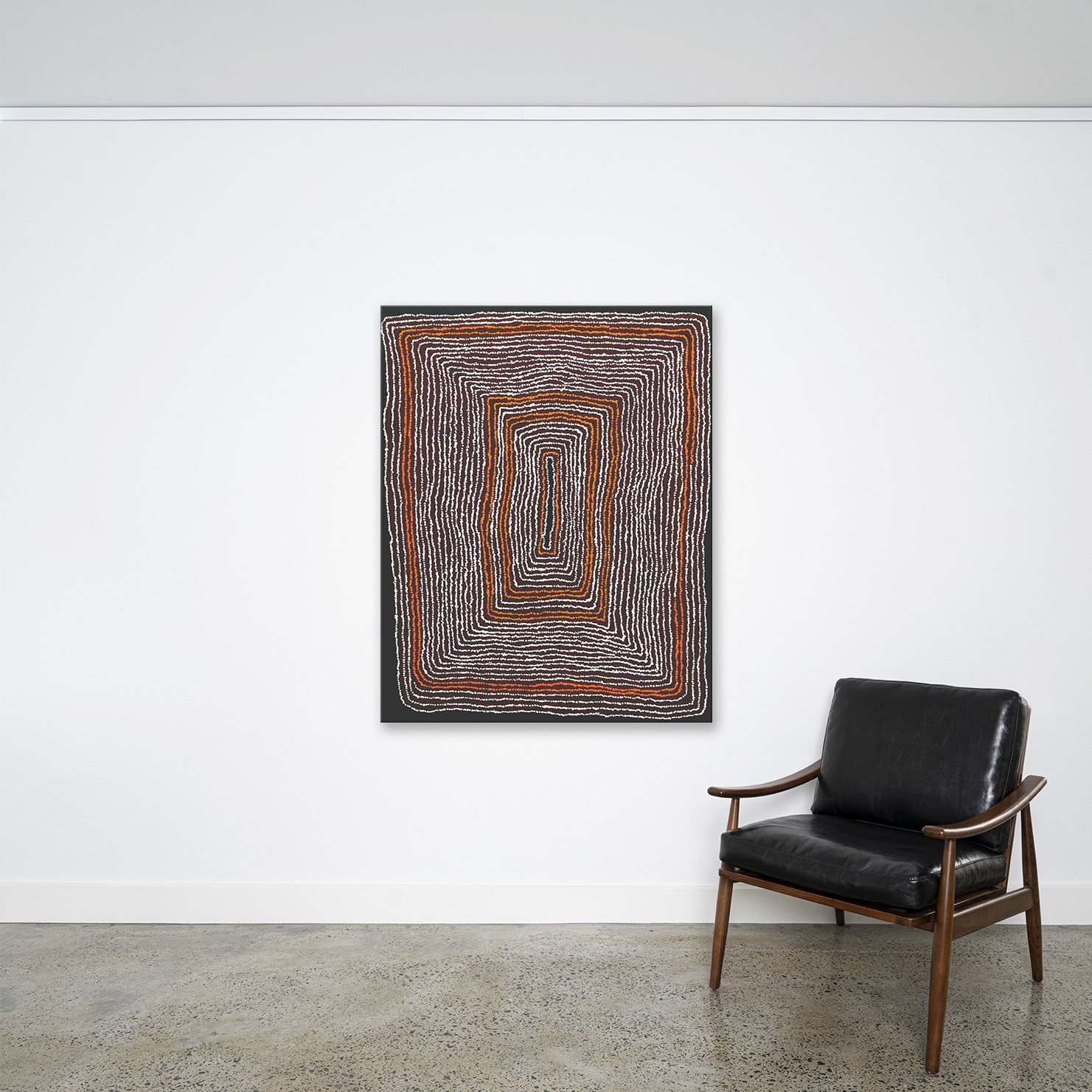
Warlimpirrnga Tjapaltjarri’s technique is one of extraordinary precision and patience: thousands upon thousands of individually placed dots, built into undulating parallel lines, lozenge forms, and meandering circuits that create surfaces of remarkable optical intensity. The dot technique derives directly from Pintupi ceremonial body decoration and sand drawing practices – one of the most ancient visual traditions on earth – transferred to canvas with the full authority of someone who learned that tradition from the inside, not as cultural inheritance but as lived practice.
The visual result is unmistakable: dense, shimmering all-over fields that vibrate with the heat and energy of the desert, their surfaces oscillating between abstract geometry and encoded geography. His palette – ochres, whites, dark reds, greys, blacks – is anchored in the colours of the Western Desert itself. These are not optical illusions. They are maps of country, songs made visible, law encoded in paint.
Critical Reception
“An outstanding Australian artist whose works are marvels – lambent circuits of white dots whose irregular contours seem to tremble and oscillate.”
— The New Yorker, 2015
“His tight parallel lines of thousands of dots oscillate like the Op Art of Bridget Riley – while transcribing ancestral narratives of Pintupi country.”
— The New York Times, 2015
HISTORICAL SIGNIFICANCE – THE PINTUPI NINE
What distinguishes Warlimpirrnga Tjapaltjarri from virtually every other artist alive is the nature of his biography. He did not inherit Pintupi law through ceremony and instruction in a settled community. He lived it – in the desert, without contact with the outside world – until he was in his mid-twenties. The knowledge encoded in his paintings is not recalled tradition. It is lived experience of country, ceremony, and law conducted entirely outside the reach of modernity.
Within three years of his first contact with European society, he had translated that knowledge to paint and exhibited it in Melbourne. Within thirty years, that same painting was acquired by Sotheby’s London, the Musée du Quai Branly in Paris, Harvard Art Museums, and Gagosian. There is no equivalent story in the history of contemporary art.
In 2019, the copyright of his 1987 work Tingari Dreaming was violated when it was reproduced as a set prop for the Netflix series After Life without permission. Following public exposure, the production company paid compensation – a moment that highlighted both his status as a recognised cultural custodian and the global visibility his work now commands.
Auction Record
Warlimpirrnga Tjapaltjarri holds one of the strongest auction records of any living Western Desert artist. With more than 304 works offered at auction internationally and over 100 confirmed sales, his secondary market is active across Sotheby’s London, Sotheby’s New York, and other major international houses.
SELECTED EXHIBITIONS & RECOGNITION
2025 Expo Chicago, Chicago, USA
2023–2024 Art Miami, Miami, USA (SmithDavidson Gallery)
2020 Desert Painters of Australia: Two Generations, Gagosian, Hong Kong
2019 Desert Painters of Australia Part II, Gagosian, Beverly Hills
2019 Desert Painters of Australia, Gagosian, New York
2019 Mapa Wiya, Menil Collection, Houston, USA
2017 Marawa, Piermarq, Sydney (solo exhibition)
2016 Pérez Art Museum Miami, USA
2016 No Boundaries: Aboriginal Australian Contemporary Abstract Painting (touring exhibition)
2015 Maparntjarra, Salon 94, New York (US debut solo exhibition)
2012 dOCUMENTA (13), Kassel, Germany — one of the most significant international contemporary art exhibitions
2009 Joint exhibition with Patrick Tjungurrayi, Scott Livesey Galleries, Melbourne
2000–2001 Papunya Tula: Genesis and Genius, Art Gallery of New South Wales, Sydney
1989 Mythscapes, group exhibition, via Papunya Tula Artists
1988 Debut exhibition, Gallery Gabrielle Pizzi, Melbourne — all 11 works acquired by National Gallery of Victoria (donated by Ron and Nellie Castan)
Public Collections
National Gallery of Victoria, Melbourne (eleven works from 1988 debut)
Art Gallery of New South Wales, Sydney
National Gallery of Australia, Canberra
Harvard Art Museums, Cambridge, USA
Musée du Quai Branly, Paris, France
Kluge-Ruhe Aboriginal Art Collection, University of Virginia, USA
Toledo Museum of Art, Ohio, USA
University of Canberra Art Collection
Kelton Foundation, USA
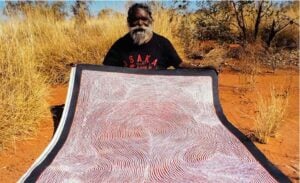
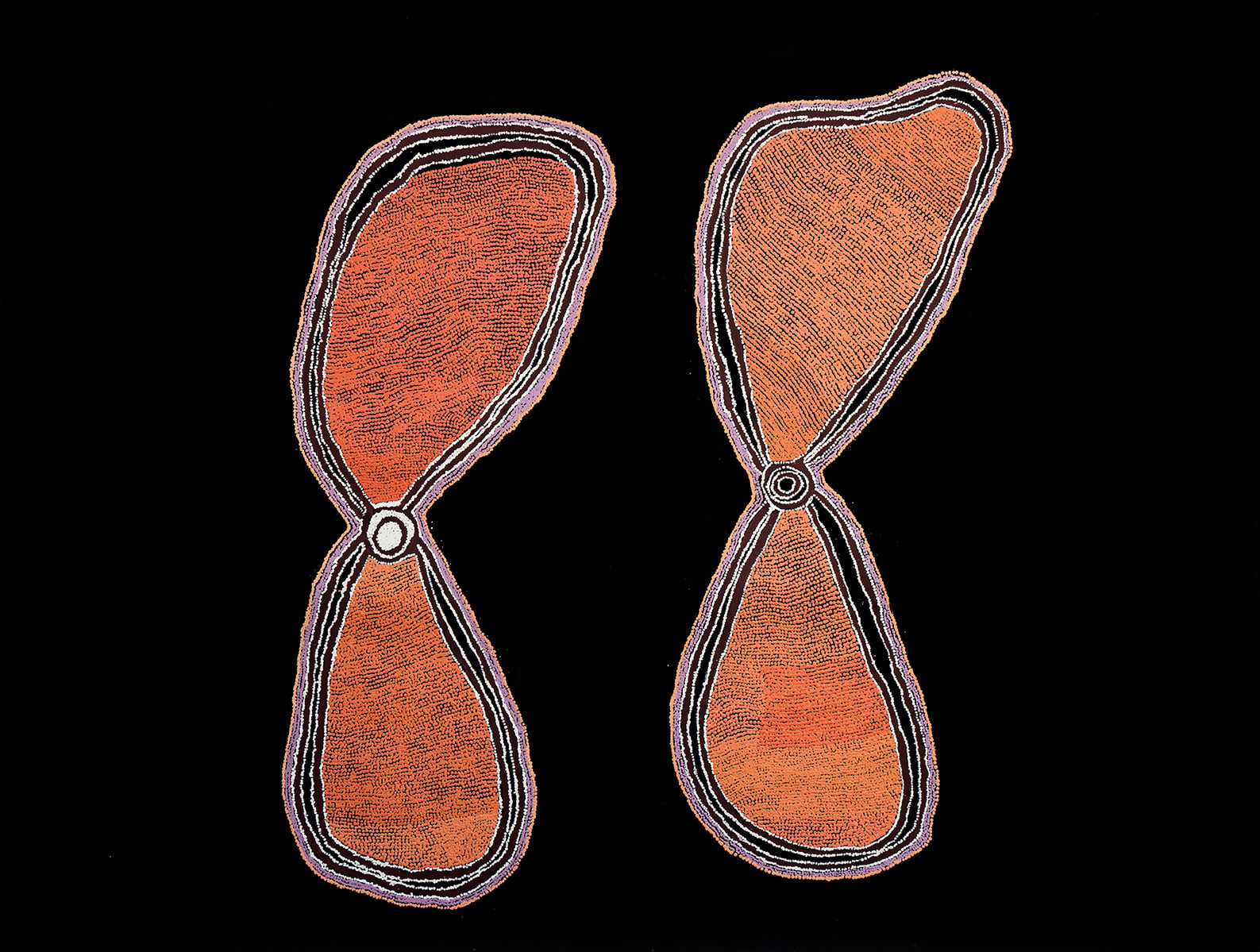
We are proud to present this historic collection: Exhibition Statement: BEFORE THE CROSSING brings together an extraordinary collection of early and highly significant Western Desert paintings from the personal collection of Christopher Simon OAM – works that have quietly lived for decades in his Northern Territory home, rarely seen beyond intimate… Continue reading
Continue reading