UPCOMING
4 to 6 November 2026
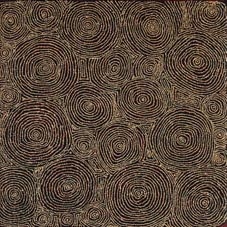
Acrylic on Linen
152 x 152 cm
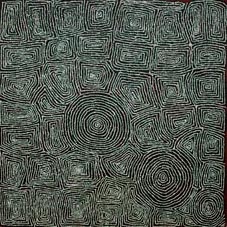
Sold SoldAcrylic on Linen
122 x 152 cm
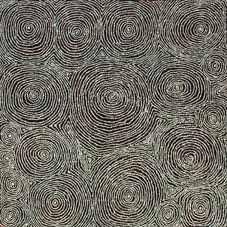
Sold SoldAcrylic on Linen
152 x 152 cm
Sold SoldAcrylic on Linen
152 x 152 cm
Sold SoldAcrylic on Linen
152 x 152 cm
Sold SoldHarvey Galleries cordially invite you and your guest to join us for the FIRST solo exhibition by Wynne Prize winner George Ward Tjungurrayi. 12th – 28th March 2010.
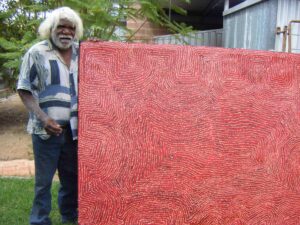
Aboriginal and Torres Strait Islander Cultural Warning: This page contains the name and image of a deceased First Nations artist. The artist’s photograph has been placed at the end of this biography in recognition that viewing images of deceased people may be culturally sensitive for some Aboriginal and Torres Strait Islander peoples. Please take care if you choose to continue scrolling.
Born circa 1945
Died 2023
Region Pintupi
Language Pintupi
George Ward Tjungurrayi was born around 1945 near Kiwirrkura in the Gibson Desert of Western Australia, on the country of his Pintupi ancestors. His ancestral country lies west of Kintore, centred on the sacred waters of Karrkurritinytja (Lake Macdonald). His older brother is Willy Tjungurrayi – also a senior Pintupi painter – and his sister is the internationally celebrated Naata Nungurrayi, making the Tjungurrayi family one of the most distinguished artistic lineages in the history of Western Desert painting.
In 1962, George was brought to Papunya following contact with the Northern Territory welfare patrol led by Jeremy Long, which had found his family living traditionally in a remote stretch of Gibson Desert. He settled into Papunya life, taking on work around the settlement, and married Nangawarra – a woman from one of the most prominent Pintupi families. The couple raised their children across several communities – Warburton, Docker River, Warakurna – before making their home at Walungurru (Kintore).
George Ward first began painting for Papunya Tula Artists in 1976, at the West Camp of Papunya, working alongside Joseph Jurra Tjapatjarri and Ray James Tjangala. A deeply reserved man, entirely at home in the desert and openly proud of it – ‘I’m a bush man, me’ – he produced a series of elegant concentric roundel compositions in those early years. His practice deepened considerably following the passing of his elder kinsman Yala Yala Gibbs Tjungurrayi, a celebrated Papunya Tula founder, an event that transferred full cultural and ceremonial custodianship squarely to George Ward. The canvases he then began producing were, as journalist Nicolas Rothwell wrote, ‘like nothing else that had come before in the desert art movement: sombre, cerebral, full of grave intellect.’
George Ward passed away on 22 September 2023, leaving a body of work celebrated in institutions across Australia and the world.
ARTISTIC PRACTICE
George Ward Tjungurrayi’s paintings are rooted in the Tingari cycle – the great Men’s Dreaming narratives of the Western Desert that describe the journeys of ancestral beings across vast tracts of country, gathering at sacred sites to perform initiation ceremonies. His primary subject is Karrkurritinytja (Lake Macdonald) and the routes of Tingari men through the surrounding landscapes west of Kintore – country he knew intimately from childhood.
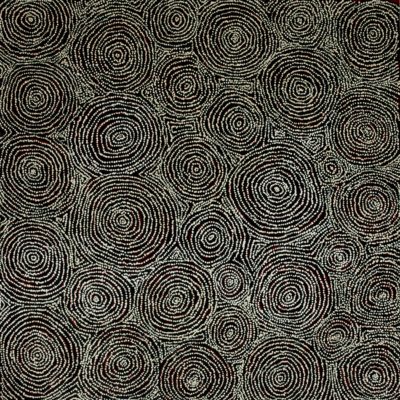
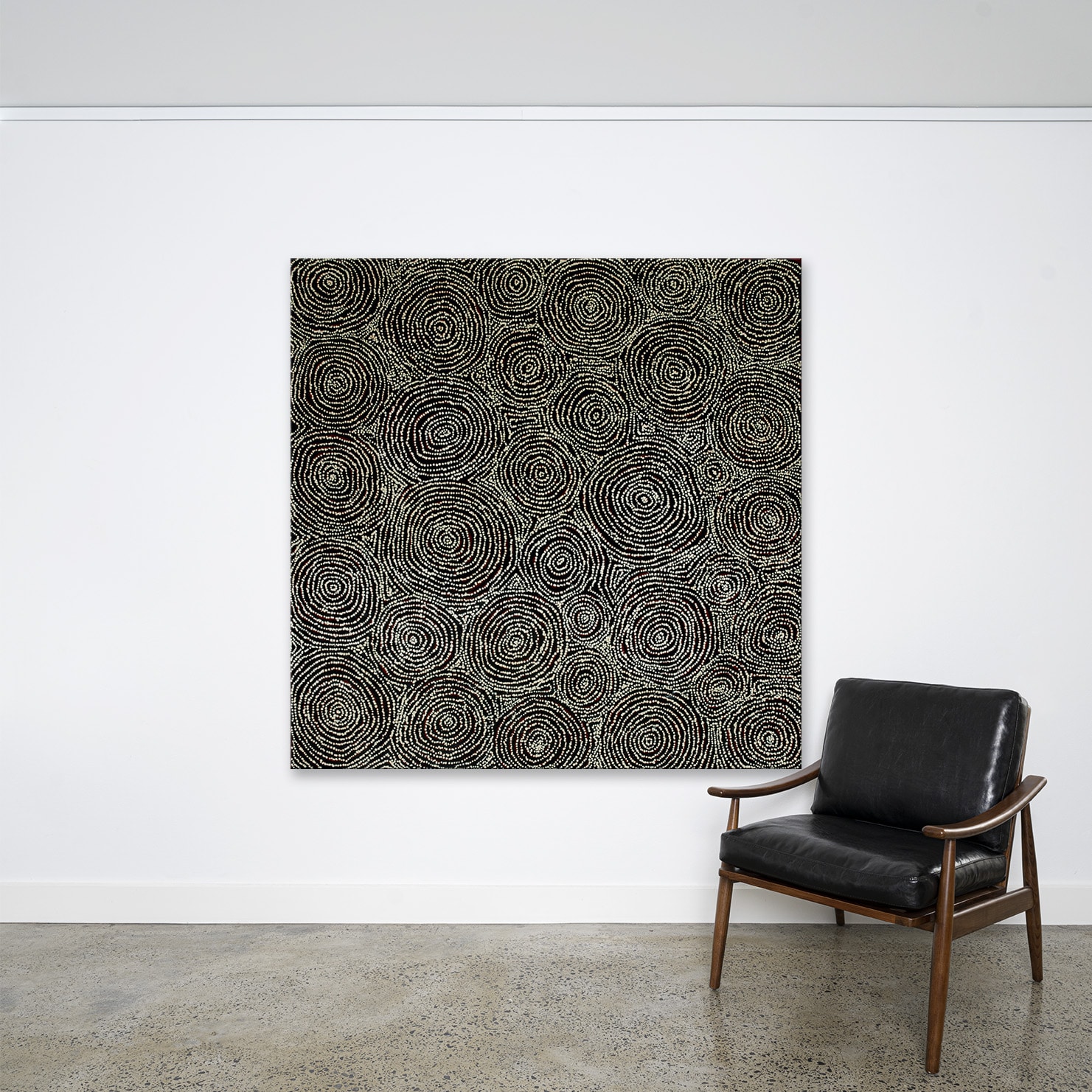
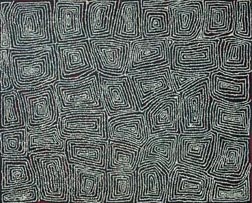
His visual language is one of geometric precision and meditative repetition. He first blocks out distinct fields across the canvas, then fills each one with tight parallel lines – wavy paths, tilted circles, chevrons – drawn with meticulous concentration over several days of work. Then he takes up his dotting stick. After days of careful detailing, a shimmering optical surface emerges that rewards sustained attention: simultaneously abstract and deeply geographical, mapping country through the logic of ceremony rather than topography.
Colour carries cultural meaning in his palette. Pink evokes country that is ‘strong and balanced’; black speaks of health and vitality, and of winter landscape. His restricted, earthy tones amplify the structural rigour of each composition, giving his work a gravity and stillness that distinguishes it from the exuberant dotwork of earlier Papunya painting.
“He’s got it – both the Pintupi grounding, and the genius to paint in ways that are innovative and exciting. He takes desert painting to another level. In the gallery people stop still in front of his works. They respond to the power, the purity and the intent.” – Gabrielle Pizzi, Gallery Gabrielle Pizzi, Melbourne
National Gallery of Victoria curator Judith Ryan identified his breakthrough: ‘He hit on this sophisticated, geometric, filled-in style almost at once. I have the sense that he began to paint only when he was ready, in full command of both story and country – and he seems able to harness considerable power and visual energy almost every time he approaches a large canvas.’
Anita Angel, curator of the Charles Darwin University Art Collection, observed: ‘It’s instantly recognisable, he has a style, but it’s more than just a style. He’s coming from somewhere deep within his mind’s eye. He’s not experimenting, he knows exactly what he’s doing; he has something to say about what he sees, and feels, and knows.’
SELECTED EXHIBTION HISTORY
1997 Utopia Art, Sydney – Solo show
1998 Gallery Gabrielle Pizzi, Melbourne, Australia
2010 Trevor Victor Harvey Gallery, Sydney Australia
2010 Linton & Kay Fine Art Gallery, Perth Australia
GROUP EXHIBTIONS
1990 Friendly Country – Friendly People, Araluen Centre for the Arts, Alice Springs, Australia
1991 Araluen Centre for the Arts, Alice Springs, Australia
1992 Broadbeach, Australia
1993 Canberra, Australia
1994 Broadbeach and Adelaide, Australia
1995 Canberra, Australia
1995 Dreamings – Tjukurrpa, Groninger Museum, Groningen,The Netherlands
1995 Museum & Art Gallery of the Northern Territory, Darwin
1995 Papunya Tula Artists Pty. Ltd., Alice Springs
1995 Australia Utopia Art Sydney, Australia
1996 Adelaide Fringe Festival, Papunya Tula Artists Pty. Ltd., Adelaide
1996 Araluen Centre for the Arts, Alice Springs
1996 Gallery Gabrielle Pizzi, Melbourne
1996 Museum & Art Gallery of the Northern Territory, Darwin
1996 Nangara. The Australian Aboriginal Art Exhibition, Brugge, Belgium
1996 Papunya Tula Artists Pty. Ltd., Alice Springs
1997 Gallery Gabrielle Pizzi, Melbourne
1997 Geschichtenbilder, Aboriginal Art Galerie Bähr, Speyer, Germany
1997 Papunya Tula Artists, Alice Springs, Australia
1998 The Desert Mob Show, Araluen Centre for the Arts, Alice Springs, Australian
1999 Aboriginal Art, IHK WÜrzburg, Deutschland (in Kooperation mit Aboriginal Art Galerie BÄhr, Speyer)
2000 Art of the Aborigines, Leverkusen, Germany (in cooperation with Aboriginal Art Gallery Bahr, Speyer)
2000 Lines, Brisbane, Queensland
2000 Papunya Tula: Genesis and Genius, Art Gallery of New South Wales, Sydney
2000 Pintupi Men. Papunya Tula Artists, Alice Springs, NT, Australia
2001 Art of the Pintupi, Adelaide
2001 Kintore and Kiwirrkura. Gallery Gabrielle Pizzi, Melbourne
2001 Palm Beach Art Fair, Palm Beach, Florida, USA Papunya Tula
2001 Melbourne, Australia
2004 Art Gallery of NSW- Wynne Prize
AWARDS + RECOGNITION
2003 National Aboriginal and Torres Strait Islander Art Award Finalist, Museum and Art Gallery of the Northern Territory, Darwin
2004 Wynne Prize – NSW Art Gallery
2004. Nicolas Rothwell, ‘Going to the Source’ Major feature profile, The Australian, 20 April 2004. One of Australia’s leading arts journalists placing George Ward at the forefront of the Western Desert canon.
COLLECTIONS
National Gallery of Australia, Canberra
National Gallery of Victoria, Melbourne (1997)
Art Gallery of New South Wales, Sydney (2004)
Art Gallery of South Australia, Adelaide
Charles Darwin University Art Collection, Darwin
Supreme Court of the Northern Territory, Darwin
Museum of Victoria, Melbourne
Artbank, Sydney
Robert Holmes à Court Collection, Perth
Musée des Arts d’Afrique et d’Océanie, Paris, France
Groninger Museum, Groningen, Netherlands
Kelton Foundation, Los Angeles, USA
LITERATURE
Friendly Country – Friendly People. Kimber, R. (Hrsg.), Araluen Centre for the Arts, Alice Springs 1990,. Johnson, V.
Aboriginal Artists of the Western Desert. A Biographical Dictionary, Craftsman House, East Roseville 1994, ISBN 9768097817 pg204
Nangara. The Australian Aboriginal Art Exhibition from the Ebes Collection. The Aboriginal Gallery of Dreamings (Hrsg.), Melbourne 1996,. Stourton, P. Corbally,
Songlines and Dreamings. Lund Humphries Publ., London 1996, ISBN 0853316910
Papunya tula Genesis & Genius – Published by AGNSW 2000 pg 120,121,180, 181, 195, 227, 281, 294
Contemporary Aboriginal Art by Susan McCulloch. Published by Allen and Unwin 1999, pg 63
ARTICLE OF INTEREST
“Going to the source”,
2004, April 20th, The Australian
By Nicolas Rothwell